




Crypto can be exciting, but it’s also a space where things can go wrong fast. Prices can crash overnight, scammers are constantly trying new tricks, and one careless mistake can wipe out your funds. That’s why this part of the course is so important.
Before you go any further, it’s worth taking a step back to understand the risks and how to protect yourself. We’re going to break things down in plain language, show you how to spot the red flags, and give you practical habits that keep your money safe.
By the end of this module, you’ll know how to handle the ups and downs of the market without panicking, recognize scams before they catch you, and keep your accounts and wallets locked down. Think of this as your crypto safety training, simple, clear, and essential.
Understanding the Dangers
Crypto can be exciting, but it comes with risks you need to know about before putting your money in. Let’s go through the big ones so you can spot them early and stay safe.
Market Volatility
Volatility simply means how much and how quickly prices move up or down. In stable markets, like big company stocks, prices might shift 1-2% in a day. In crypto, those swings can be 10%, 20%, or even more within hours.
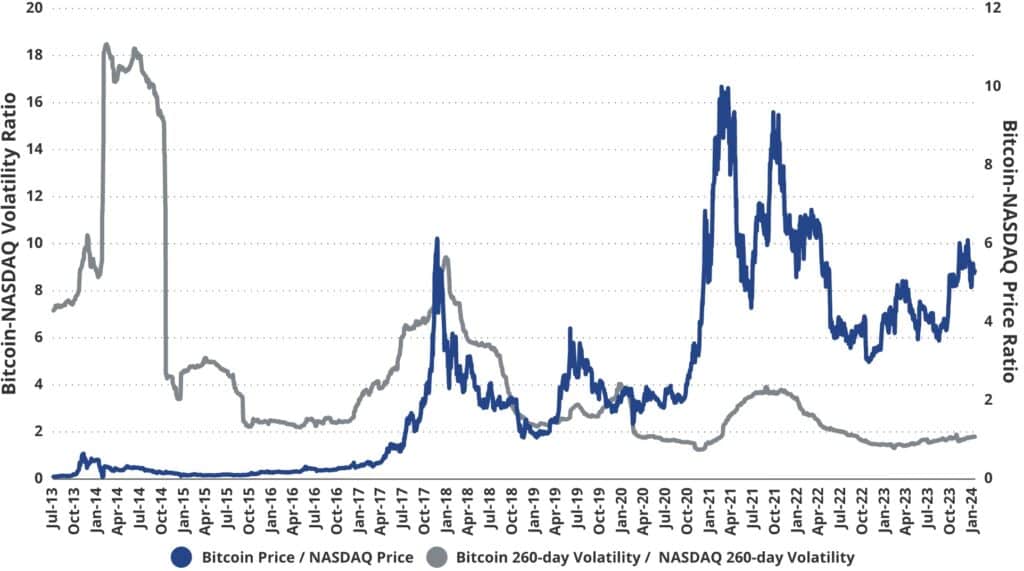
That’s why crypto often feels like a rollercoaster; it rises sharply and can just as easily fall just as hard. For instance, if you buy $1,000 worth of Bitcoin at $30,000, and it rises 10% to $33,000, your balance becomes $1,100. But if it drops 15% to $25,500, that same $1,000 is now $850. Moves like this can happen in less than a day.
Why is crypto so volatile?
Volatility is the reason some people make fast profits, but it’s also why many lose money quickly. The key lesson is to expect sharp swings and never be surprised when prices change dramatically. If you’d like to learn more, check out our crypto volatility guide for detailed tips on how to manage it effectively.
Crypto Scams
Where there’s money, there are scammers, and crypto is no different. Here are the most common ones you should be aware of:
The golden rule is simple: if it sounds too good to be true, it probably is. Always double-check links, never share your private information, and research before you invest.
Crypto Project Check
Before deciding to invest in a crypto project, here is a basic checklist you can use to determine the viability of the project. Following this simple checklist could potentially save you a lot of wasted time, energy, and money!
Checklist Item
What to Look For
✅ White Paper & Roadmap
Clear explanation of the problem, technology, and future milestones. Look for poor grammar or vague promises (red flags).
Check: Ensure the white paper and roadmap exist and are logically written.
✅ Use Case & Utility
The coin must have a functional purpose (e.g., governance, gas fee payment, staking). High utility drives long-term demand.
Check: Use a data platform like CoinMarketCap or CoinGecko to quickly find the project’s ‘Category’ or ‘Function’.
✅ Team & Credibility
Transparent, experienced team members with verified backgrounds in finance, tech, or the relevant industry. Anonymous teams are a major red flag.
Check: Look for audits from reputable firms like CertiK or PeckShield.
✅ Market Metrics
High Market Cap suggests stability. High Circulating Supply relative to Total Supply suggests less future dilution risk. High Trading Volume shows liquidity.
Check: Compare Circulating vs. Total Supply to estimate future potential selling pressure (Dilution Risk).
✅ Tokenomics & Distribution
A fair distribution model (who owns what). Ensure a high percentage isn’t controlled by just a few wallets, which can lead to price manipulation. Look for transparent Vesting Schedules (when founders/early investors can sell).
Check: Review the largest holders’ wallets (often visible on explorers) for extreme concentration.
✅ Scam Flags & Audits
Look for unrealistic promises (e.g., “Guaranteed 100x return”), excessive influencer promotion, or sudden price spikes followed by crashes.
✅ Community & Activity
Look for active, healthy discussions in non-official channels. The official GitHub should show recent, consistent code development.
Check: Ensure the team is answering critical questions (not just hyping the price) and that code development is still active.
Summary: Only Invest What You Can Afford to Lose
This is the golden rule of crypto investing. Because prices move so fast and scams exist, you should only put in money you’d be okay walking away from. If losing it would hurt your rent, bills, or lifestyle, don’t risk it.
Here’s what that looks like:
- If your monthly rent is $1,000 and you put that into a volatile altcoin that drops 40%, you’re left with $600 and a serious problem at the end of the month.
- If you invest $3,000 of emergency savings into Bitcoin at $60,000 and it falls 50% to $30,000 (as it did in 2022), that $3,000 becomes $1,500. If you suddenly need that cash, you’re stuck.
- If you invest $500 of money you’ve set aside for high-risk investing and it goes to zero, it’s not ideal, but it won’t affect your rent, bills, or savings.
One of the clearest examples was Terra Luna in 2022. Investors saw their holdings lose more than 99% of their value in a few days, turning $10,000 into less than $100. Many had invested their savings, thinking it was “safe.” Sadly, Terra is only one example among many. This is why it is critically important for all crypto investors to do their due diligence, thoroughly research what crypto projects are worthy of investment, and consider sticking to mainly high-quality blue-chip cryptocurrencies.
Investing only what you can afford to lose protects your finances and your emotions. If the market swings, you can stay calm and make rational choices instead of panicking.
Chapter Quiz