






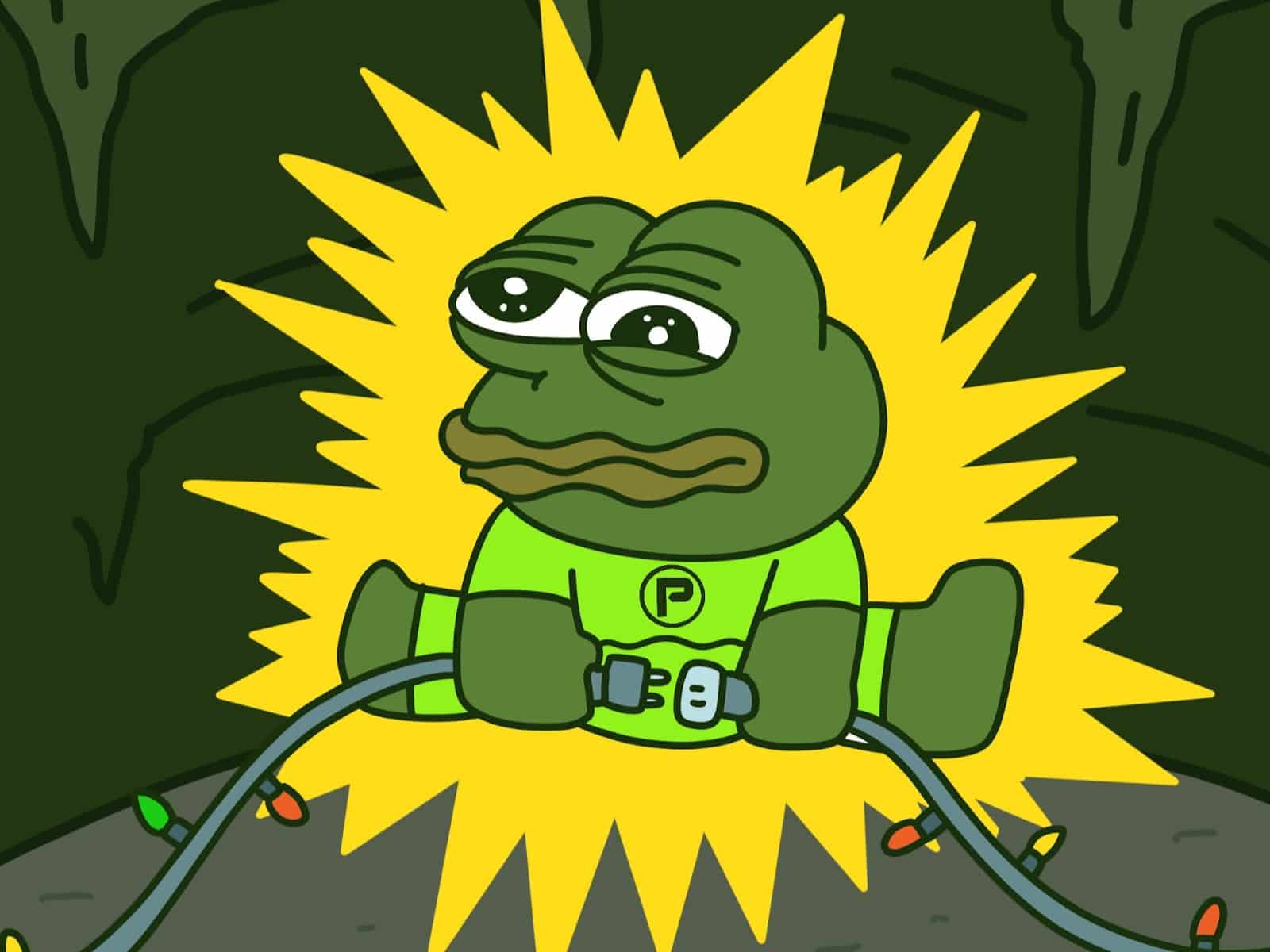
The convergence of GameFi and meme coins is already taking shape, and one project is attempting to pull both narratives into a single system: PepeNode (PEPENODE).
PepeNode introduces crypto’s first mine-to-earn meme coin project, where players construct and manage virtual mining operations, making trade-offs around efficiency and scale, with output tied to widely traded meme assets such as Pepe (PEPE) and Fartcoin (FARTCOIN).
That structure directly targets the failure modes that defined earlier Play-to-Earn (P2E) cycles. Instead of leaning on repetitive actions and inflationary rewards, PepeNode centers gameplay on system management and incentive alignment, while applying constraints intended to prevent the unchecked dilution that hollowed out previous GameFi launches.
Capital has followed even as the broader market remains muted. More than $2.38 million has already flowed into the project during its presale phase, reflecting early interest despite subdued risk appetite across crypto.
However, with 14 days remaining before the presale closes and the token moves to exchange listings, entry conditions are approaching a fixed cutoff. Once pricing shifts to open market discovery, the current low presale level of $0.0012112 per PEPENODE will no longer apply.
PepeNode Works on Relationship between Gameplay and Economic Design
At the start of the year, a blog post from ChainPlay reports that 93% of meme coin projects were effectively dead. The study analyzed 3,279 projects and classified a game as defunct if its associated token had fallen by more than 90% in value and daily active users had dropped below 100.
Some commentators have argued that 2025 could mark a comeback for the sector, pointing to more scalable blockchains and a friendlier regulatory backdrop under a pro-crypto U.S. administration. In practice, however, gaming activity failed to reclaim prior highs. The P2E subsector activity fell from $14.6 billion at the start of the year to just $2.8 billion, which is a decline of nearly 81%, according to CoinGecko data.
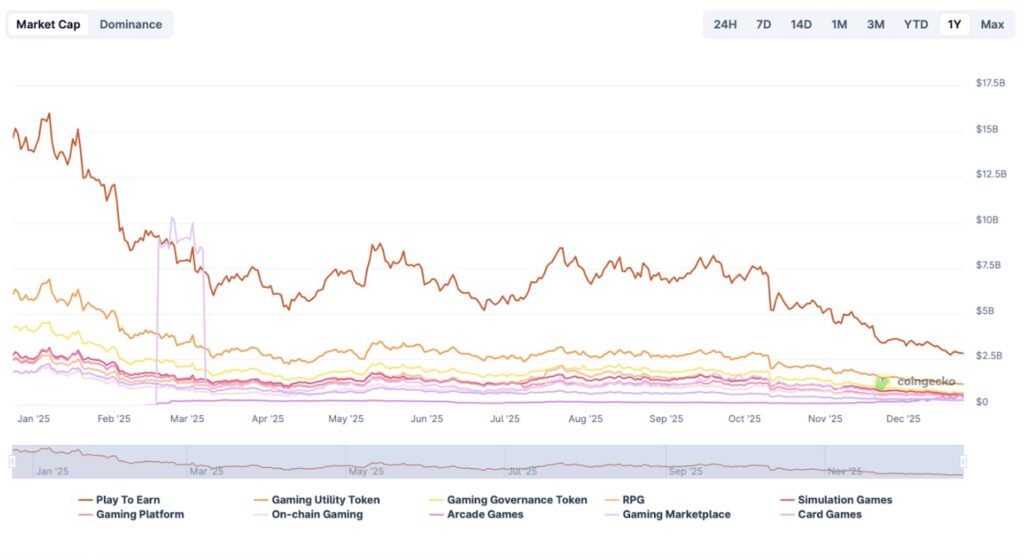
Source: https://www.coingecko.com/en/categories/gaming#key-stats
Seen in hindsight, attributing the sector’s collapse to infrastructure limitations alone misses the point. Faster blockchains did not prevent game economies from breaking down. Rather, the more consistent failure lay in design.
Most crypto games were built around repetitive extraction structures, encouraging players to farm rewards and exit as quickly as possible. Token inflation and shallow gameplay turned participation into a short-lived arbitrage rather than a sustainable system.
Until those structural flaws are addressed, crypto gaming risks repeating the same pattern that defined previous cycles: brief bursts of activity followed by rapid collapse.
PepeNode emerged from that context. The project was developed around the idea that the problem was not scale or access, but the relationship between gameplay and economic design, an approach that has led some outlets to frame it as part of the next phase of the sector, often referred to as P2E 3.0.
Turning Mining Mechanics Into Competitive Gameplay
PepeNode draws from an industry that underpins the Bitcoin network itself: mining. Rather than abstracting that process away, the game translates core mining mechanics into a virtual environment centered on efficiency and optimization.
Players operate virtual mining rigs where performance depends on how effectively nodes are combined. Each node carries distinct traits, and the way those traits interact determines output, pushing players to think in terms of system design rather than simple accumulation.
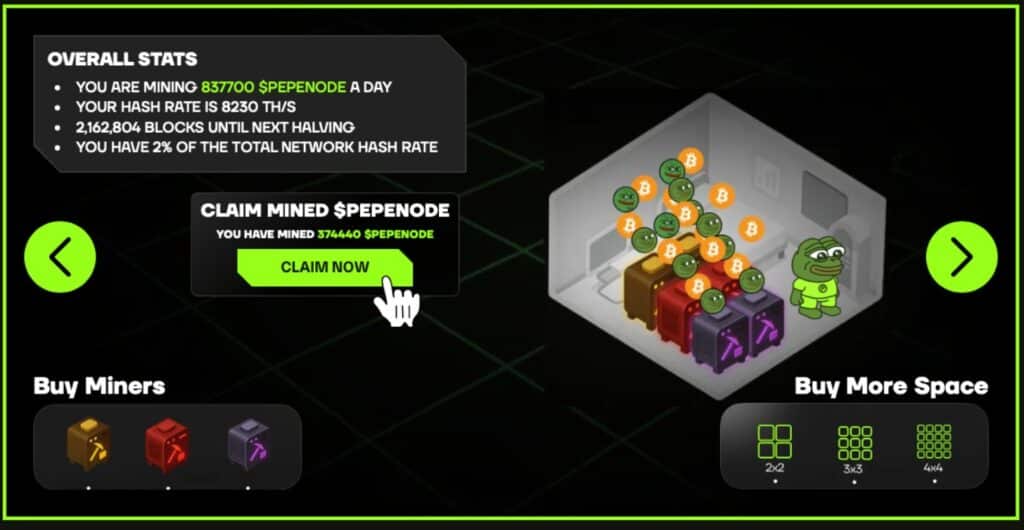
Decision-making extends beyond node selection. Players allocate resources between expanding operations and upgrading existing infrastructure, weighing short-term output against longer-term efficiency.
Future mechanics are expected to introduce additional constraints such as power usage and heat management, further anchoring gameplay in real-world mining dynamics.
The result is a structure that favors strategy over repetition. Advancement comes from understanding trade-offs and refining setups, not from tapping endlessly or completing interchangeable daily tasks.
In doing so, success in PepeNode translates into access to the assets that dominated the last market cycle: meme coins.
Why Meme Coins Sit at the Top of the Reward Stack
The decision to anchor PepeNode around meme coins rather than a generic utility asset is intentional. At the base level, players earn PEPENODE, the game’s native token, through efficient virtual mining operations. That token functions as the system’s internal currency, used for node acquisition, upgrades, and other capital allocations required to improve performance.
Crucially, PEPENODE is not framed as the final objective. As players refine their setups and climb efficiency rankings, the game introduces upper-tier rewards in the form of widely recognized meme assets such as PEPE and FARTCOIN, with the potential for others like Dogecoin (DOGE) as the system evolves. This structure shifts incentives away from immediately selling the native token and toward using it as intended inside the game.
For high-performing players, competition extends beyond accumulating PEPENODE alone. Leaderboards and efficiency thresholds create pathways to earning external assets, giving users longer-term goals tied to performance rather than extraction.
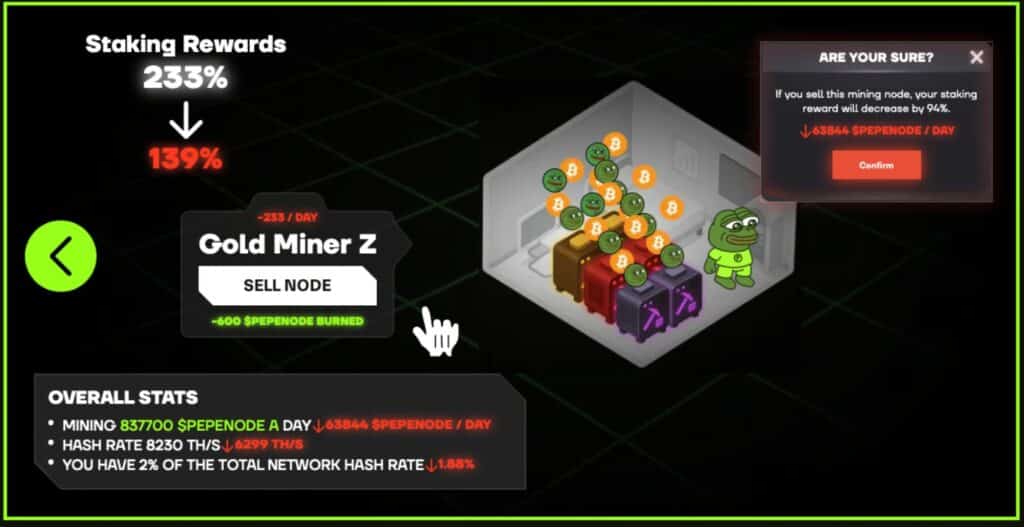
The second pillar of the incentive design is supply pressure. PEPENODE has a fixed total supply, and a significant portion of tokens spent on upgrades, node purchases, and other in-game allocations is permanently removed from circulation.
While this does not guarantee appreciation, it directly limits unchecked expansion and addresses the inflation dynamics that undermined earlier GameFi economies, helping the system remain viable as participation increases.
Final Opportunity to Join the PepeNode Presale
Because PepeNode links mining-style gameplay with meme coin rewards, it sits at the intersection of two sectors that have historically driven attention during different phases of the market. Whether that translates into a broader revival in 2026 depends on adoption and execution, particularly whether the game sustains engagement for reasons beyond earning alone.
If it does, the secondary effect would be increased relevance for meme assets within a competitive, performance-driven context rather than pure speculation.
That longer-term dynamic would not materialize overnight. It would unfold as players accumulate experience, systems mature, and participation compounds, placing any broader impact closer to the next market cycle rather than the current one.
With 14 days remaining in its presale, interested participants can still acquire PEPENODE using ETH, BNB, USDT (ERC-20 or BEP-20), or credit and debit cards via the project’s official presale page. The project recommends connecting through the best crypto and Bitcoin wallet in the market, Best Wallet, where PepeNode appears in the Upcoming Tokens section, allowing users to buy, track, and claim tokens once live.
PepeNode’s smart contract has been audited by Coinsult. Follow the project on X and Telegram for the latest updates.
DISCOVER: 16+ New and Upcoming Binance Listings in 2025

Why you can trust 99Bitcoins
Established in 2013, 99Bitcoin’s team members have been crypto experts since Bitcoin’s Early days.
Weekly Research
100k+Monthly readers
Expert contributors
2000+Crypto Projects Reviewed