






A sophisticated DNS hijacking attack struck CoW Crypto Swap on April 14, 2026, forcing a full protocol shutdown and leaving traders scrambling. Price data for the COW token remains thin in the immediate aftermath, early reports suggest volume collapsed while the token itself held surprisingly firm, a split signal that raises more questions than it answers. The full damage picture is still coming into focus.
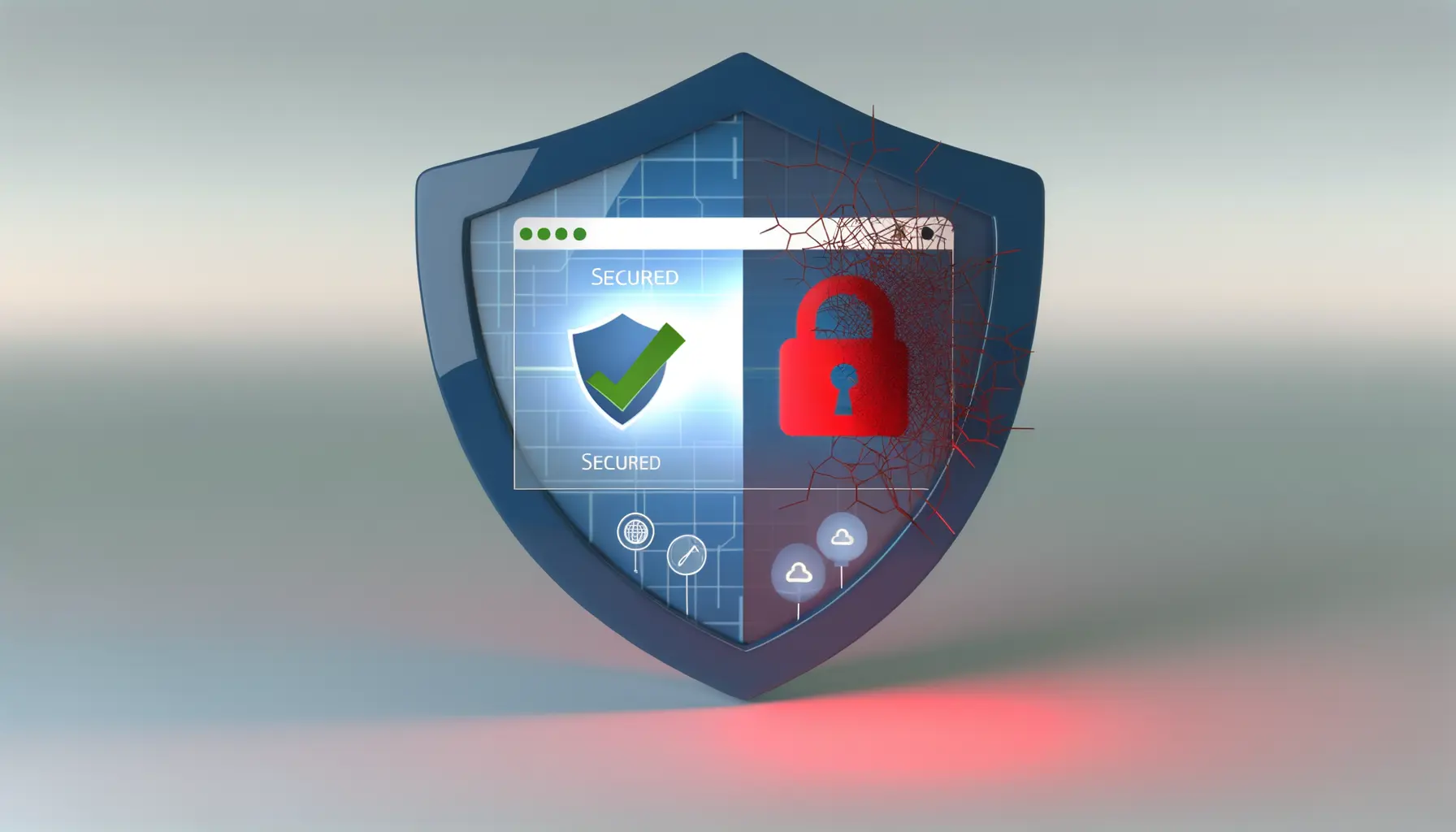
Security firm Blockaid first flagged the breach at approximately 14:54 UTC, detecting that attackers had seized control of domain records for swap.cow.fi and cow.fi at the registrar level, redirecting real users to a pixel-perfect clone designed to drain wallets.
On-chain data indicates at least $1 million in user assets were siphoned within the first three hours, including a single interception of 219 ETH from one trader’s wallet. The CoW DAO issued emergency warnings across social platforms at 15:41 UTC, advising users to stop all interactions and revoke token approvals via Revoke.cash for anything signed after the 14:54 UTC timestamp. Critically, the core smart contracts were never touched, this was a frontend attack, not a protocol-level exploit.
UPDATE: The swap dot cow dot fi domain is currently locked and not accessible. We are working with security experts to assert control over the domain while it is locked, but we *do not* expect it to be live again tonight.
For those who rely on CoW Swap daily, we have spun up a… https://t.co/gtoeMfxYEy
— CoW DAO (@CoWSwap) April 14, 2026
The incident lands as DeFi frontend attacks are becoming an uncomfortable pattern in 2026, putting the entire sector’s user-facing security model under a harsh spotlight. Whether the COW token can shake off the volume shock depends heavily on how fast trust and domain control can be restored.
Can COW Crypto Token Price Recover After the DNS Hijacking Volume Shock?
Reliable price figures for COW in the immediate post-incident window are scarce, a side effect of both the service halt and the event’s recency. What the data does confirm: trading volume collapsed sharply following the hijack, while the COW token demonstrated notable price resilience, a divergence that could mean two very different things depending on your read.
Volume collapse without a corresponding price collapse often signals that sellers aren’t panicking yet. That’s mildly encouraging. But thin volume also means price discovery is unreliable; a single large sell order in a halted-protocol environment can move the needle dramatically.
The team has launched a temporary secondary UI while working to regain control of the compromised registrar account, providing a partial operational lifeline.
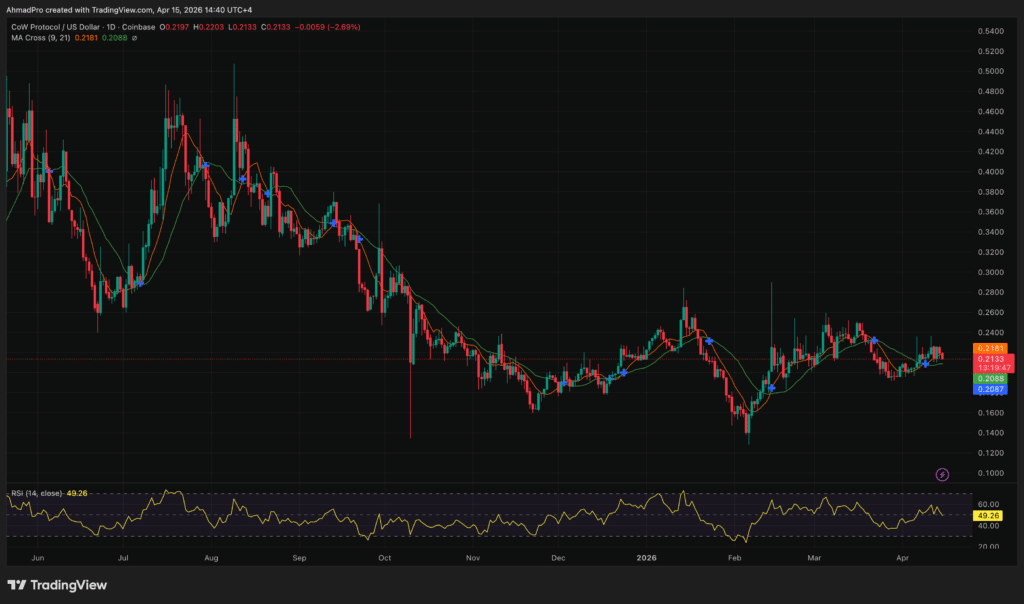
This whole COW situation is now about how clean and fast the recovery is, because if the team delivers a clear post-mortem, restores everything quickly, and no new issues arise, that is when users regain confidence and price can move back toward pre-incident levels, sometimes even stronger than before.
But the risk window is still open, and if more losses emerge or the domain situation drags on for a couple of days, that uncertainty starts to hit trust hard, and once confidence slips, even loyal holders begin to exit.
So this is not really a technical setup anymore; it is a trust rebuild, and the speed and transparency of the response will decide whether this turns into a recovery or a deeper unwind.
Investors watching COW should closely monitor the CoW DAO’s post-mortem timeline. Transparency speed, not just technical resolution, will drive sentiment here.
Bitcoin Hyper Eyes Infrastructure Confidence as DeFi Frontend Risks Pile Up
The CoW Swap incident is a pointed reminder that decentralized protocols can still carry deeply centralized attack surfaces — the domain registrar, in this case, proved to be the weakest link in an otherwise robust system. It’s the kind of event that makes investors quietly reassess where their infrastructure risk actually lives.
Frontend and phishing-style attacks on crypto users have been escalating steadily, and the appeal of Layer 2 infrastructure built on Bitcoin’s base-layer security is growing in that context.
Bitcoin Hyper (HYPER) is positioning itself directly in that conversation. Billing itself as the first-ever Bitcoin Layer 2 with Solana Virtual Machine (SVM) integration, the project claims sub-Solana-speed performance while inheriting Bitcoin’s foundational security and trust — addressing Bitcoin’s longstanding limitations in one architecture: slow transactions, high fees, and limited programmability.
The presale has raised $32,407,295.54 at a current price of $0.0136786, with staking rewards available to early participants. Features include a Decentralized Canonical Bridge for BTC transfers and high-speed, low-cost smart contract execution. The project has drawn consistent attention even during broader market turbulence — though presales carry real risk, including token illiquidity until launch and no guarantee of exchange listings.
For updates, follow the Bitcoin Hyper project on X and join the official Telegram channel.
EXPLORE: Top Crypto Presales to Watch Now
Follow 99Bitcoins on X (Twitter) For the Latest Market Updates, and Subscribe on YouTube For Daily Expert Market Analysis.

Why you can trust 99Bitcoins
Established in 2013, 99Bitcoin’s team members have been crypto experts since Bitcoin’s Early days.
Weekly Research
100k+Monthly readers
Expert contributors
2000+Crypto Projects Reviewed