








In This Article
A major crypto investor has suffered a massive hack, losing around $27.3 million after hackers exploited a vulnerability in their multi-signature wallet. Blockchain security experts at PeckShield raised the alarm on December 18, 2025, revealing that the theft stemmed from a leaked private key, which allowed the intruder to bypass protections and extract funds rapidly.
The incident adds to a growing list of crypto hacks this year, hitting both high-profile whales and major exchanges.
#PeckShieldAlert A whale's Multisig was drained of ~$27.3M due to a private key compromise.
The drainer has laundered $12.6M (4,100 $ETH) via #TornadoCash and retains ~$2M in liquid assets.
The drainer also controls the victim's multisig, which maintains a leveraged long… pic.twitter.com/1Ulk4X7bkl
— PeckShieldAlert (@PeckShieldAlert) December 18, 2025
Multi-signature wallets are favored by large holders for their added layer of security, typically requiring approvals from multiple parties. Yet, in this case, the exposure of a critical key effectively neutralized those safeguards, granting the hacker unrestricted access. On-chain monitoring shows the perpetrator quickly funneled a substantial portion of the stolen assets through Tornado Cash, a tool designed to anonymize transactions by mixing funds.
According to PeckShield, the attacker has already obscured approximately $12.6 million, roughly 4,100 ETH, while keeping about $2 million in readily accessible holdings.
EXPLORE: The 12+ Hottest Crypto Presales to Buy Right Now
Hacker Gains Control Over High-Stakes DeFi Position – Potential Compromise Vector? Flaw in Multisig Setup Process
The incident’s severity escalates due to ongoing exposure in decentralized finance. The intruder has seized command of the affected wallet, which manages a significant leveraged bet on the Aave platform. This involves roughly $25 million in ETH deposited as backing for a $12.3 million DAI loan.
In leveraged DeFi setups, sudden price swings or poor health ratios can trigger automatic liquidations, potentially magnifying losses far beyond the original theft. With the hacker able to execute transactions at will, they could withdraw collateral, adjust borrowings, or force closures, creating unpredictable volatility and complicating any efforts to reclaim assets.
Evidence from blockchain records indicates deliberate, uniform transfers to the mixing service, pointing to a professional operation aimed at evading detection.
One possible explanation for how the hacker gained access to the wallet comes from a user who highlighted a likely entry point during the wallet’s initial setup.
Records show a Safe Proxy Factory contract creation on November 4, 2025, used to deploy the multisig. Theories suggest the victim may have enlisted help from an untrusted party for setup, allowing the attacker to embed access, capture the private key, or later replace the legitimate signer with their own address.
A victim’s private key may have been compromised, resulting in a loss of $38 million.
What makes this interesting:
The victim created a multisig wallet (1/1) and moved funds into it on 04-11-2025 at 07:48:11.
At 08:23:23, the main wallet, which was also the signer wallet,… pic.twitter.com/l9urCksQSO
— Specter (@SpecterAnalyst) December 17, 2025
As the industry grapples with persistent threats, experts urge adopting hardware devices, multi-factor verifications, routine code reviews, and real-time alerts to fortify defenses against such exploits.
DISCOVER: If Bitcoin Enters a Deep Freeze, This Is Where Some Investors Are Parking Capital
Another Crypto Hack – $27 Million Gone: How One Click on a Fake Link Drained a Crypto Wallet
One week ago, another crypto hack resulted in the theft of over $27 million, and not in the complicated way you might think. The loss began with a conversation. A scammer reached out, shared convincing information, and slowly built trust over several days with the victim.
Every link sent appeared harmless, until one wasn’t.
The final link looked identical to an Etherscan page. When opened on a phone, it silently executed malicious code. That device happened to be a multisig signer, giving the attacker everything needed to move the funds.
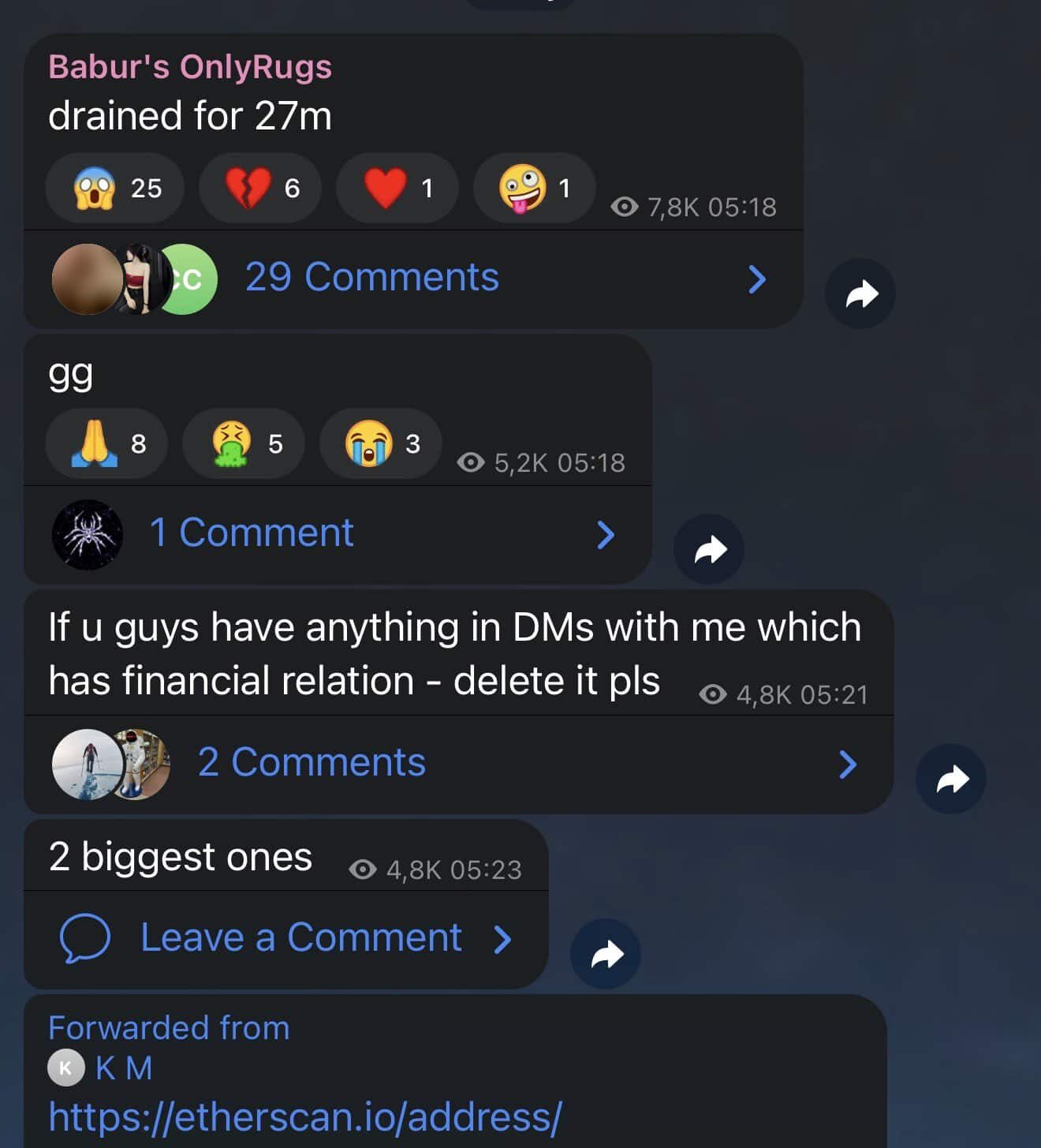
(Source: X)
This wasn’t carelessness. It was overconfidence. In crypto, losses often happen not when people are cautious, but when they feel safe.
DISCOVER: 15+ Upcoming Coinbase Listings to Watch
Stepping Up Security: Pepenode Revolutionizes the Mining Game for Crypto Whales

In the wake of high-profile hacks like this $27M multisig breach, crypto whales are rethinking their strategies to safeguard assets and maximize returns. Enter Pepenode, the innovative mine-to-earn meme coin platform that’s transforming virtual mining into a secure, gamified powerhouse. Built on Ethereum, Pepenode lets users construct and upgrade digital mining rigs without the hassle of physical hardware, earning real rewards like PEPENODE tokens and other meme coins through strategic gameplay inspired by hits like Factorio.
Why is Pepenode a game-changer for whales dodging hacks? It shifts focus from vulnerable wallets to a browser-based ecosystem where mining happens in a controlled, virtual server room. No more exposed private keys in risky DeFi setups: build your rig, add nodes, and optimize for passive income with zero upfront hardware costs.
The presale has already surged past $2.3 million, drawing savvy investors who appreciate its deflationary mechanics, staking options, and community-driven vibes.
Pepenode emphasizes security from the ground up: air-gapped-like isolation in virtual environments, multi-factor authentication for upgrades, and transparent on-chain rewards to minimize phishing risks.
Visit PEPENODE HereKey Takeaways
- A leaked private key allowed hackers to bypass a multisig wallet, resulting in a $27M theft despite added security layers.
- High-profile hacks highlight the need for better security; platforms like Pepenode offer safer, virtual mining alternatives for whales.

Why you can trust 99Bitcoins
Established in 2013, 99Bitcoin’s team members have been crypto experts since Bitcoin’s Early days.
Weekly Research
100k+Monthly readers
Expert contributors
2000+Crypto Projects Reviewed