




Something interesting happens when a gaming project starts to look less like an experiment and more like a working network. Wall Street Chain ($WSC) enters that space with an idea that many teams have discussed, but few have executed at scale: a structure where each game has its own chain.
This article takes a closer look at how this model works and why it has drawn attention from those following developments in blockchain gaming.
Wall Street Chain aims to offer a setting where games do not compete with each other for block space. Instead, each one runs on a separate subchain that can be tuned for its own activity patterns. This approach has become part of a wider discussion on how to support applications that need stable performance.
A Look at the Multi-Chain Structure
The most notable part of Wall Street Chain’s design is its use of independent subchains. Each game receives its own environment instead of sharing space with all others on the network. This structure aims to lower congestion that often appears on chains that host many active applications at the same time.
Developers often face challenges when network conditions shift suddenly. Large events, game launches, or seasonal updates can create traffic spikes. By spreading games across multiple chains, Wall Street Chain tries to limit disruptions. It also gives studios more predictable conditions that may help them plan long-term updates.
This approach does not promise perfect performance, but it seeks to reduce some of the common pain points in blockchain gaming. The concept has gained interest because it shows an attempt to address real issues instead of building features that are difficult to apply to active games.
The Web2 x Web3 Gaming Era
The fastest L1 chain built to power the next era of on-chain games for degens first. For gamers, by gamers. pic.twitter.com/Fa9T42kBri
— Wall Street Chain (@WallStreetChain) December 5, 2025
Tools Designed for a Growing Gaming Ecosystem
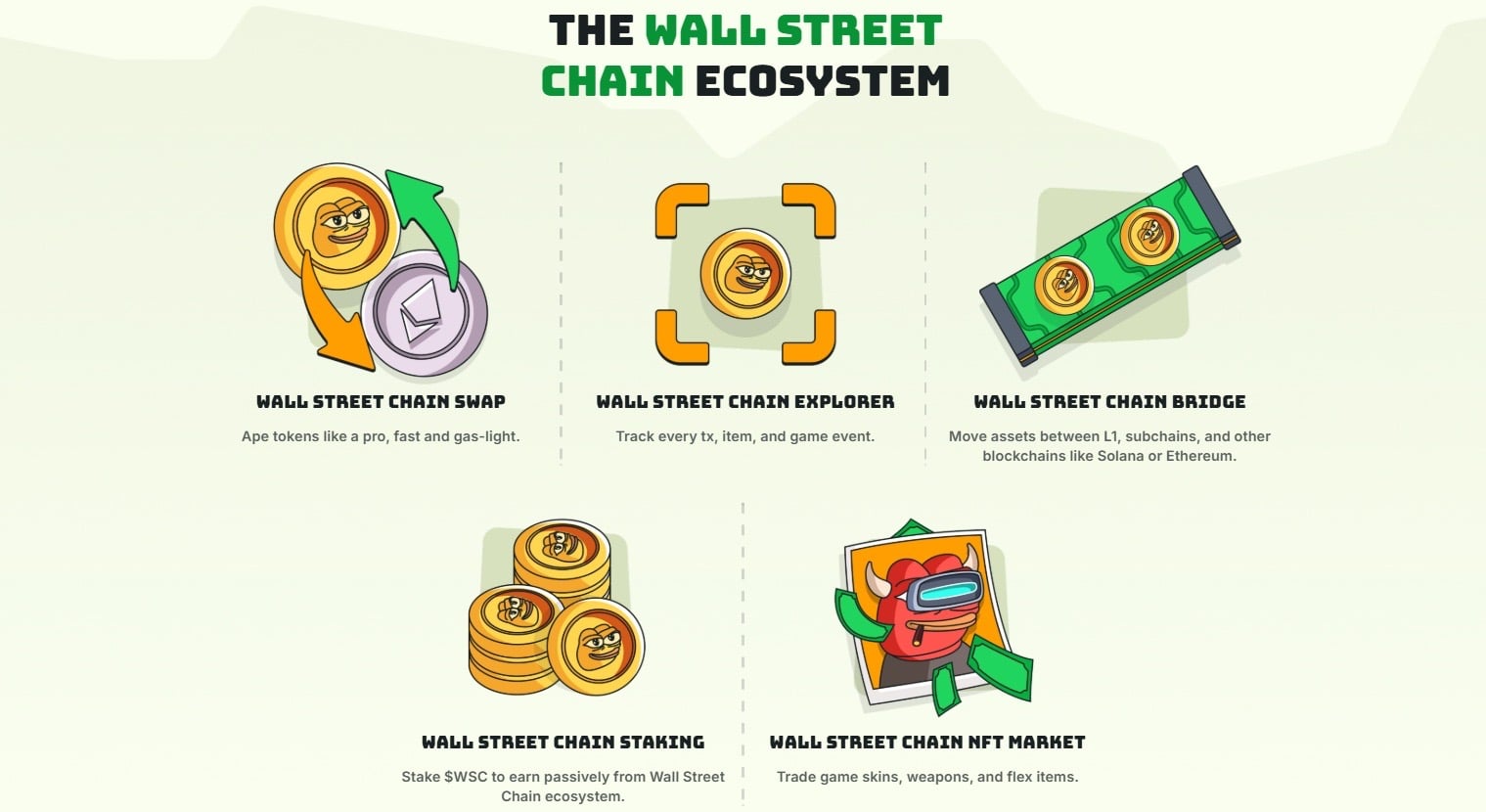
Wall Street Chain aims to support an ecosystem where studios can build different types of on-chain titles. The project highlights its plans for an NFT marketplace, governance features, and transaction tools that work across the network. These elements help shape a framework that developers can use without relying on multiple external systems.
The $WSC token supports several functions inside the ecosystem. It is used for transactions, governance, and staking. It also covers subchain fees. Keeping these activities tied to one token helps maintain a clear and simple structure for users and developers.
Transaction costs and speed are also part of the discussion. As many games rely on frequent actions, steady performance is important. Wall Street Chain’s model aims to offer predictable fees, which may help developers design games that rely on frequent on-chain interactions.
All these features work together to present a network that tries to offer practical tools rather than complex components that are difficult to implement in real games.
Visit Wall Street Chain Presale
How Developers Might Use the Network
The network’s structure gives teams the chance to build games with different needs. Some titles require fast updates. Others may use on-chain logic to track characters, items, or social systems. By offering separate chains, Wall Street Chain aims to give developers a space where they can shape gameplay without dealing with unrelated congestion.
This flexibility matters because blockchain gaming has grown into a field with many styles of projects. Some titles need high throughput. Others need steady performance during peak activity. A multi-chain approach may help support this variety.
None of this guarantees outcomes, but it shows a strategy built around practical concerns. The project tries to address common issues such as delays, high fees, and unpredictable network behavior. These goals play a role in how the project positions itself as it grows.
The Current Crypto Presale Environment
Wall Street Chain is running a crypto presale with a token price set at $0.00028846. The project allows purchases through several cryptocurrencies and also supports card payments. This helps broaden participation. The team states that the presale price will move upward in steps as the sale continues.
Staking is a notable part of this phase. The project offers an estimated 500% reward rate for tokens locked during the presale. This rate is positioned as a temporary incentive for early participants. The project has reported strong staking activity, with a growing number of tokens already locked. This has become part of the early narrative around the network’s expansion.
The presale also helps the team prepare for upcoming releases. It gives the project early liquidity that can support the development of its tools and ecosystem. These points play into ongoing discussions about how the project will grow after the presale ends.
What the Coming Months May Reveal
The next steps for Wall Street Chain will show how the network performs as more games and features appear. The project aims to support real gameplay, not only tests or isolated demos. Its multi-chain structure, token framework, and ecosystem tools suggest a plan built around predictable performance.
The broader gaming sector continues to explore blockchain technology. Projects that address congestion and reliability issues may become key players in this shift. Wall Street Chain presents itself as part of this trend through a model that aims to support different types of game activity.
In the coming months, updates, crypto presale progress, and early launches may help observers understand how the structure performs under real conditions. For now, the project stands out for its attempt to tackle practical problems in blockchain gaming through a network designed for many moving parts.
Discover the future of crypto gaming with Wall Street Chain:
Presale: https://www.wallstchain.com/
Social: https://x.com/WallStreetChain

Why you can trust 99Bitcoins
Established in 2013, 99Bitcoin’s team members have been crypto experts since Bitcoin’s Early days.
Weekly Research
100k+Monthly readers
Expert contributors
2000+Crypto Projects Reviewed