







D’CENT Wallet has taken another major step towards protecting crypto users by installing a powerful real-time threat detection system into its hardware wallet.
The feature, built in partnership with the blockchain security provider Blockaid, will now monitor transactions at the point of signing, essentially giving users active warnings before they approve any action that could compromise their funds.
This update marks a quiet but important evolution in how crypto wallets operate.
A Real-Time Defense Layer That Acts Before It’s Too Late
The most common point of failure in digital asset security is not the hardware or the software, but the moment of human approval. Clicking ‘Sign’ without a full grasp of what is being approved has led to countless losses, especially with the growing use of social messaging, browser dApps, and unofficial token listings.
D’CENT has integrated a real-time security engine that actively scans all outgoing transactions, contract approvals, and wallet interactions for signs of malicious behavior. It does not run after the fact, nor does it wait for external prompts. Instead, it simulates the transaction quietly in the background, cross-references multiple risk databases, and alerts the user before anything is signed.
Among the red flags it can catch are wallet-draining smart contracts, malicious token behaviors, and suspicious dApps that attempt to execute unauthorized functions. It also flags copied wallet addresses known to be associated with phishing scams, a growing problem in informal user spaces.
To illustrate, consider this typical instance: A user receives a Telegram message from someone posing as a community manager from a project they recently joined. The message includes a wallet address where the user is told to send a small amount of ETH to receive “airdrop tokens.” It looks convincing. The name, logo, and chat history all appear legitimate. The user copies the address and opens D’CENT to send the funds.
At this point, the app runs a background scan. The wallet address is flagged. A notification appears stating that the destination address has been linked to known phishing activity. The user is stopped before they can even sign. No transaction goes through, no funds are lost. The scam fails quietly.
D’CENT Wallet and What Sets It Apart
D’CENT Wallet was originally created by IoTrust, a South Korean company known for its engineering in secure digital identity solutions. However, D’CENT’s main focus is on creating a truly mobile-native hardware wallet. While most traditional cold wallets rely on desktop interfaces, the D’CENT wallet integrates secure hardware directly with a mobile app, removing the friction that often leads users to ignore safety.
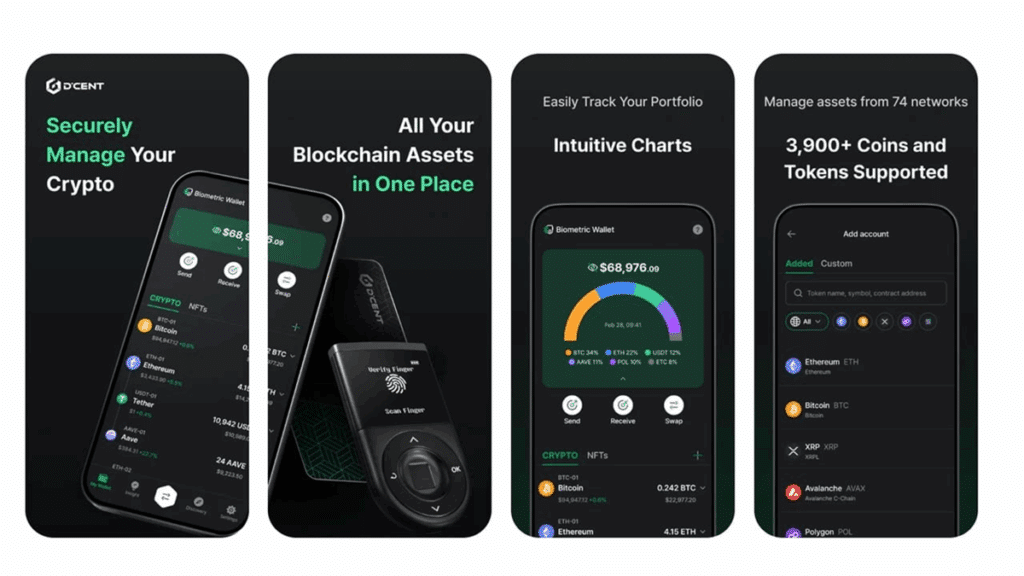
The wallet supports over 85 blockchain networks and allows users to store, manage, and swap over 4,600 assets, including Bitcoin, Ethereum, and Solana. Biometric authentication, native dApp access, and full integration with DeFi services all come standard. It is a complete crypto interface packaged into a format that fits into a user’s daily mobile flow.
In recent years, D’CENT has become a respected name in the wallet space, not because of aggressive marketing, but because of its consistent rollouts of user-protective features. Its updates often focus on closing real-world security gaps, not just adding bells and whistles. That trajectory continues with this latest integration.
Why This Update Matters for the Future of Crypto Wallets
The importance of this update extends beyond the technology used, particularly given its origins from a new-gen wallet. The old standard was cold storage and manual approval, where the model assumes that users know what they are doing at all times. However, reading smart contract code or understanding complex token logic is often not realistic for someone new to the crypto space.
Sang Su Baek, CEO of IoTrust, said: “Security should not rely on users knowing how to read smart contracts or recognize red flags. Your wallet should do more than store your assets. It should actively protect you by flagging threats before you sign anything.”
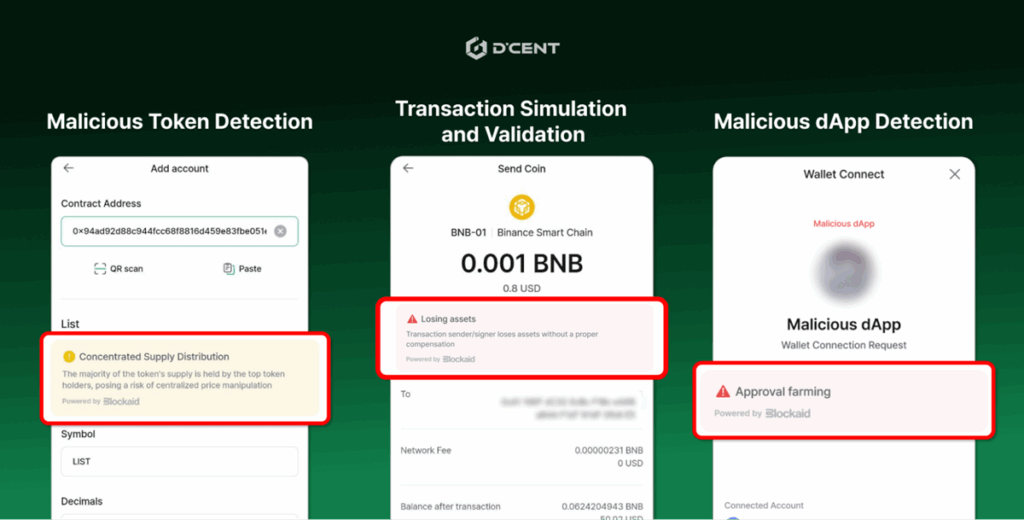
With this new layer, D’CENT could help set a new standard, where wallets function not only as repositories, but also as protective systems that understand the context and behavior of the users involved. This approach could potentially transform wallets from passive tools used for a single purpose into active security participants within the Web3 ecosystem.
Thanks to its features and developments, the wallet strikes a perfect balance between self-custody and security. By integrating advanced threat detection directly into the signing process, the app empowers users to hold their keys without compromising real-time protection. That is a rare balance in today’s crypto environment, where users are often forced to choose between convenience and safety.
By catching suspicious activity before anything is signed, D’CENT is offering something very few wallets do today. It prevents damage at the only moment when it can still be stopped. With this move, the line between cold storage and smart security begins to blur, and that is a step in the right direction.
This may not be the loudest development in crypto this month, but for those who use digital wallets every day, it might be one of the most important.

Why you can trust 99Bitcoins
Established in 2013, 99Bitcoin’s team members have been crypto experts since Bitcoin’s Early days.
Weekly Research
100k+Monthly readers
Expert contributors
2000+Crypto Projects Reviewed