




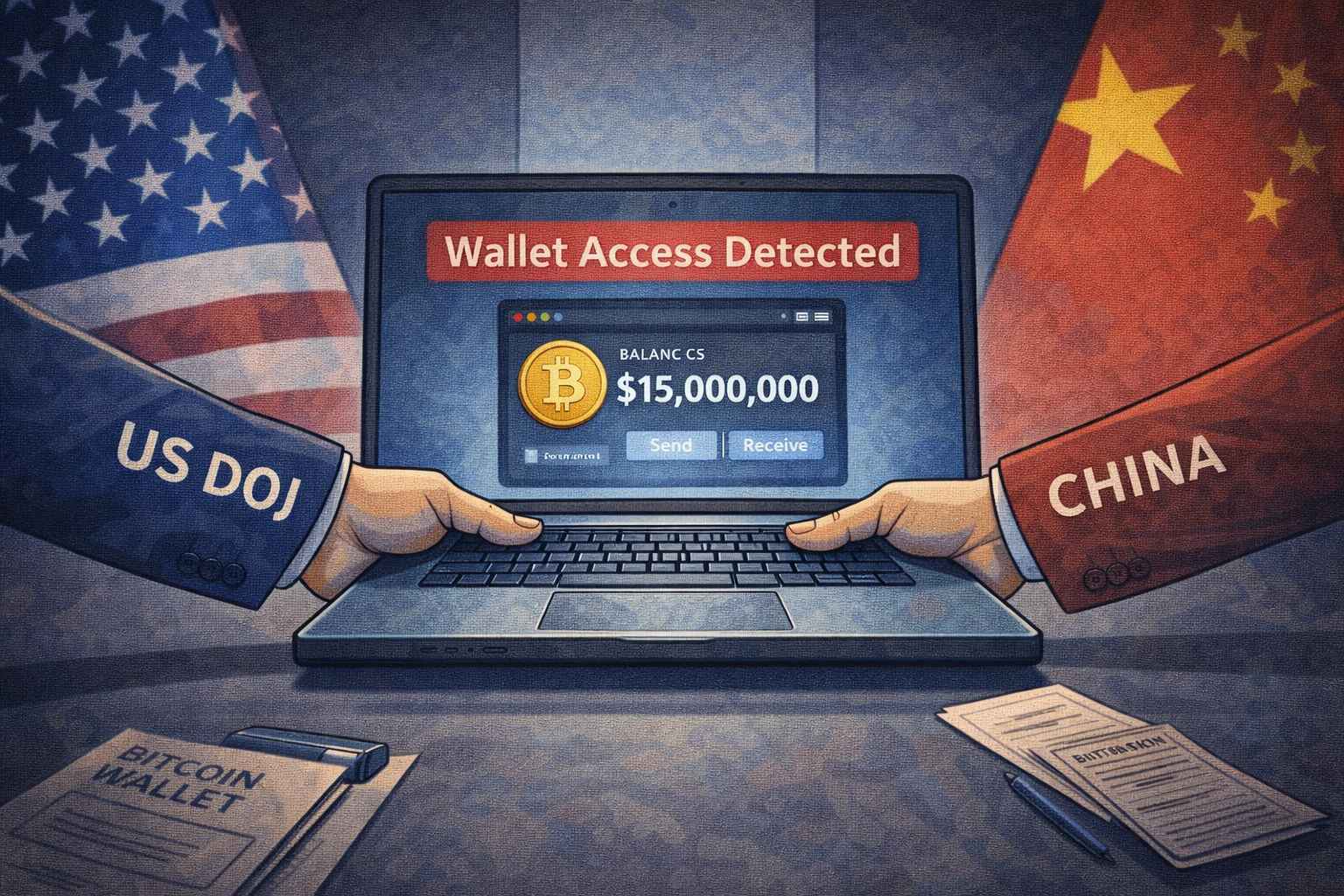
The US government is reported to control about $15 billion worth of Bitcoin that was once linked to a scam network with ties to China, and China now claims the funds were hacked years earlier, before being seized by Washington. Bitcoin barely moved after the news, staying close to its recent range as traders treated the story as background politics rather than a market event.
It comes at a time when governments are watching crypto more closely than ever, especially money connected to scams. This goes beyond a dispute between two countries as it brings up a question many new users quietly wonder about.
How safe is Bitcoin if governments can take it?
What actually happened with the $15B Bitcoin?
The case focuses on Chen Zhi, who is accused of running large “pig butchering” scams across Southeast Asia. These scams build trust over time before draining victims of their savings. US prosecutors say they seized 127,271 Bitcoin from Chen in 2025, calling it the largest crypto seizure on record.
Chen Zhi, founder and chairman of Prince Group, was arrested in Cambodia and deported to China, where he is now under investigation by Chinese authorities.
Chen Zhi rose to prominence over the past decade as one of the most influential Chinese business figures in Cambodia,… pic.twitter.com/6PTeKcgoZh
— Jacob in Cambodia 🇺🇸 🇰🇭 (@jacobincambodia) January 7, 2026
China tells a different story. State researchers say Chen lost almost the same amount of Bitcoin in a hack back in 2020, and that the coins sat untouched for years. A Chinese government report says this pattern looks unusual because most thieves try to cash out quickly.
Blockchain tracking firms added to the confusion. Arkham Intelligence labeled wallets holding Bitcoin as connected to the US government. The US Justice Department has not explained how it got access to the private keys, which are the passwords needed to move Bitcoin.
Why this matters for everyday Bitcoin holders
Bitcoin only moves when someone has the private keys. You can think of them as the only key to a locked vault. That means a few things could have happened. Chen may have handed them over, someone close to him may have done it, or they were taken through hacking.
For regular users, this highlights a simple truth. Bitcoin resists censorship, but it can still be taken if authorities link it to crime and get hold of the keys. This has happened before, including in the Silk Road case, where the US recovered billions of years after the site was shut down.
This is also why self-custody gets so much attention. Holding your own keys, using hardware wallets, and staying away from risky platforms lowers your exposure. It does not remove all risk, but it keeps you out of easy reach.
Governments are getting better at crypto enforcement
The bigger pattern is easy to see. Governments now treat Bitcoin like digital cash that leaves a trail. They follow it patiently, even if it takes years. The Chen case fits this approach. US agencies tracked coins that had been sitting still, linked them to large scam operations, and acted once they had legal backing.
Similar methods helped recover Bitcoin from the Bitfinex hack long after the theft happened. That makes life harder for criminals. It also reassures users who worry that crypto exists outside the law. Enforcement moves slowly compared to banks, but it does work.
Where the controversy gets uncomfortable
China’s criticism points to another issue. There is no clear public plan for what happens to the seized $15 billion. Many victims lost their life savings, and thousands of people were forced to work in scam compounds, yet the money now sits under government control.
That raises fair questions: Who gets the funds, when do they get them, and under what rules?
For now, China’s claim remains an accusation rather than a proven fact, but it shows how crypto often ends up pulled into global power struggles. As prices rise and old crimes resurface, more cases like this are likely to appear. Bitcoin’s history stays on the public ledger, and governments are watching it closely.
DISCOVER: 20+ Next Crypto to Explode in 2025
Follow 99Bitcoins on X for the Latest Market Updates and Subscribe on YouTube for Daily Expert Market Analysis

Why you can trust 99Bitcoins
Established in 2013, 99Bitcoin’s team members have been crypto experts since Bitcoin’s Early days.
Weekly Research
100k+Monthly readers
Expert contributors
2000+Crypto Projects Reviewed