





A new Solana governance proposal called SIMD-0550 aims to double the speed at which the network’s inflation rate is. It targets to eliminate $1.5 billion in future SOL token emissions at current prices and compresses the timeline to reach the terminal inflation floor from 5.7 years down to 2.8. The proposal was submitted by Helius engineer lostintime101 and has already drawn public backing from Solana Labs co-founder Anatoly Yakovenko, giving it more institutional weight than most governance discussions at this stage.
The tension inside this proposal is genuine. SOL holders benefit directly from reduced dilution – fewer new tokens entering circulation means your existing holdings represent a larger share of total supply over time. But validators, the infrastructure operators who secure the network, earn a meaningful portion of their revenue from inflationary staking rewards. Cut the emission rate faster, and that revenue stream shrinks faster too.
This article will explain exactly what SIMD-0550 changes on-chain, why the ‘mini-halving’ label is useful but imprecise, and what the three most likely outcomes look like for holders and stakers alike.
New: @__lostin__ has submitted SIMD-0550, a Solana proposal that could potentially cut around $1.5B in future $SOL emissions by doubling the network’s disinflation rate from 15% to 30%, bringing $SOL to its 1.5% terminal inflation rate in 2.8 years instead of 5.7. pic.twitter.com/rueegmx6dy
— SolanaFloor (@SolanaFloor) June 4, 2026
What Solana SIMD-0550 Actually Proposes, and How It Works
Solana’s current SOL inflation schedule operates on a decay curve. The network started at an 8% annual issuance rate, and that rate decreases by 15% each year until it hits a terminal floor of 1.5%.
Think of it like a tap that gets turned down a little every year; it never fully closes, but it keeps dripping less and less. SIMD-0550 doesn’t move the tap’s starting position or its final resting point. It just turns the handle faster, doubling the annual disinflation rate from 15% to 30%.
That single change, same start, same finish, faster journey, is what produces the $1.5 billion reduction in estimated future emissions. The actual dollar figure fluctuates with SOL’s price, but the supply-side math is fixed: fewer tokens created over the next three years than would be issued under the current schedule.
we just revived the simd to reduce solana inflation
worry not manlets, it will happen this time
all gas no brakes https://t.co/02KQS6pw3c
— mert (@mert) June 3, 2026
The ‘mini-halving’ comparison to a crypto halving is useful for reader orientation, but breaks down quickly. Bitcoin’s halving is algorithmic and immutable; it happens every 210,000 blocks regardless of governance votes or community consensus.
SIMD-0550 is a governance-driven proposal that requires supermajority validator approval to pass, and a nearly identical proposal, SIMD-0228, was rejected in March 2025 with only 37.8% of validator stake in favor, well short of the required 66.67%. The emission cut mechanism is entirely different in character.
The one thing that determines whether this proposal is good or bad for any specific reader is their role. If you hold SOL without staking, reduced dilution is unambiguously positive. If you earn yield through staking, the calculus is more complicated, and that complication is where most of the debate lives. Understanding how Solana’s tokenomics have been evolving provides useful context for why this debate is happening now.
EXCLUSIVE: Earn $10 USDC Via Binance Sign-UpWhat a 50% Emission Cut Means for SOL Price: Three Scenarios
SIMD-0550 passing with a strong validator consensus activates the bull case. Lower SOL inflation means less constant sell pressure from validators liquidating rewards to cover operating costs. If demand holds steady while the new supply entering circulation drops meaningfully, the supply-demand math favors price appreciation.
The $1.5 billion in avoided emissions does not get redistributed. It stays out of circulation entirely.
The base case is slower and messier. SIMD-0550 passes, but validator adoption is uneven, smaller operators exit, and the governance timeline extends through multiple epochs before implementation cleans up.
The anticipated price lift takes longer to materialize as the market simultaneously digests validator set contraction and the competing SIMD-0547 proposal, which aims to increase SOL burns through enhanced resource-based fees. Not a bad outcome for long-term holders. Just a slow one.
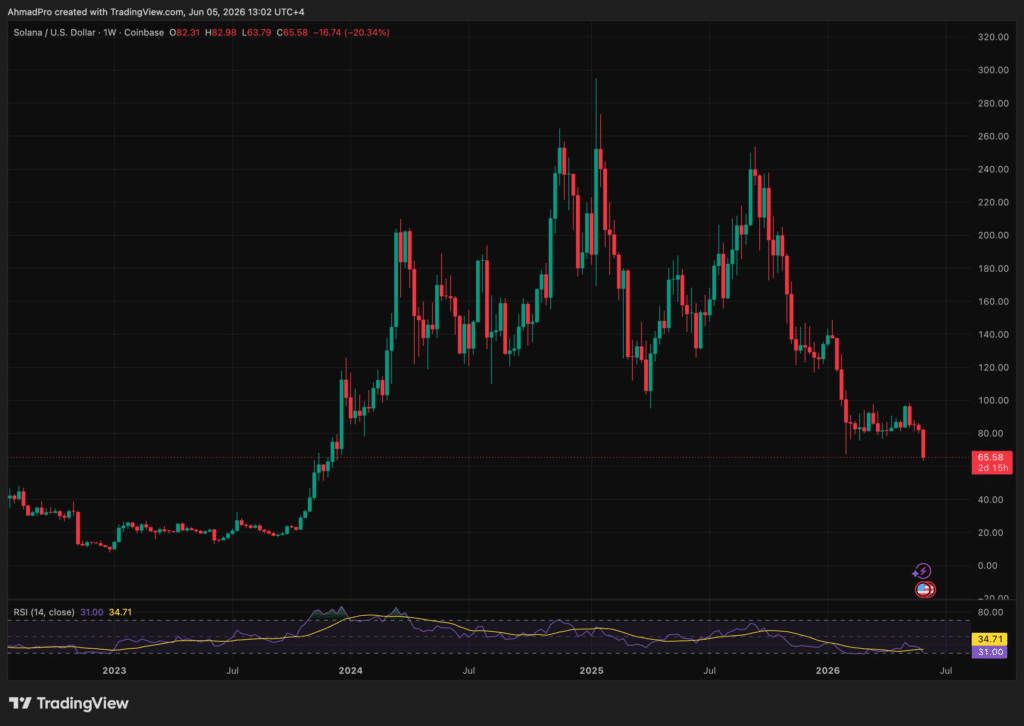
The bear case deserves equal weight. If validator revenue compression causes a significant number of operators to exit, particularly smaller independent validators who cannot absorb the yield cut, the result is a more centralized network with fewer nodes securing it.
A less decentralized Solana is a structurally weaker Solana, and that weakness becomes a price narrative of its own. Lower staking rewards also reduce the incentive to lock up SOL, which could paradoxically increase circulating supply as previously staked tokens get unstaked and moved to exchanges. That is not a tail risk. It is the direct mechanical consequence of cutting yield faster than the market adjusts.
The validator economics matter here. SIMD-0096, passed in May 2024 with 77% approval, has already redirected 100% of priority fees to validators instead of the prior 50/50 split. That change was designed to cushion validators against future issuance cuts. Whether it provides sufficient cushion under SIMD-0550’s accelerated schedule is the genuinely open question.
DISCOVER: 10+ Next Crypto to 100X In 2025
Follow 99Bitcoins on X For the Latest Market Updates and Subscribe on YouTube For Daily Expert Market Analysis.

Why you can trust 99Bitcoins
Established in 2013, 99Bitcoin’s team members have been crypto experts since Bitcoin’s Early days.
Weekly Research
100k+Monthly readers
Expert contributors
2000+Crypto Projects Reviewed