
In This Article
- Best Anonymous Poker Sites for No-KYC Crypto Poker in 2026
- Anonymous Poker Sites Ranked: Top Picks in 2026
- Best Anonymous Poker Sites Compared
- How Anonymous Poker Sites Work?
- Benefits of Choosing No KYC Poker Platforms
- Are No-KYC Poker Sites Safe?
- How to Make Deposits & Withdrawals Anonymously?
- Step-by-Step Guide to Getting Started with Anonymous Poker
- Conclusion: Anonymous Poker Sites
The best anonymous poker sites have surged in popularity as more players look for privacy, security, and hassle-free access to online poker. These platforms eliminate intrusive identity checks while still delivering a smooth, reliable gaming experience.
In this guide, we analyze the best anonymous poker sites, focusing on how they manage to combine anonymity with performance, fairness, and ease of use. Our experts have also assessed key poker-specific factors such as player traffic, game formats (cash games, MTTs, and Sit & Gos), rake value, and how each site handles anonymous play, including no-KYC withdrawals and wallet-based access.
Best Anonymous Poker Sites for No-KYC Crypto Poker in 2026

150% up to $2,000 Bonus

100% Deposit Bonus up to $2,000

100% Poker Bonus + 100% Casino Combo Bonus

100% Bonus up to $500

10% Boost your First Deposit up to $200

100% on Your 1st Deposit up to $2,000

100% Match on Your First Deposit, up to $1,000

300% Welcome Bonus up to $2,000 + 20% Instant Cash

100% up to $2,000

100% up to $1,000 for Crypto Deposits

250% Welcome Bonus up to $2,000 + 20% Instant Cash

40% Instant Cash & Up To $400 in Tourney Tickets

150% Bonus up to 3,000 USDT
Key Takeaways
- The best anonymous poker sites allow players to enjoy real-money games without sharing extensive personal or identity information.
- Player traffic varies by platform, directly affecting table availability, tournament size, and overall game quality.
- Most sites support key poker formats, including cash games, MTTs, and Sit & Gos, with active lobbies across different stakes.
- Rake and rakeback deals differ significantly, with some platforms offering better long-term value through lower fees or cashback-style rewards.
- KYC is usually not required at signup, but can be triggered at specific points, most commonly on higher withdrawals (often around $2,000–$5,000) or flagged account activity.
- Crypto payments (BTC, USDT, etc.) enable faster deposits and withdrawals compared to traditional poker platforms.
- Most of these platforms operate under offshore licenses that allow more flexible gaming conditions.
Anonymous Poker Sites Ranked: Top Picks in 2026
The poker rooms below offer quick sign-up, crypto deposits, and real-money play with little to no KYC for most regular users. This makes them among the best options for private online poker.
| Our Ranking | Poker Site | Poker Offering | Verification Required? | Best For |
| #1 | CoinPoker | Texas Hold’em, Pot Limit Omaha, Three Card Poker, Video Poker | No |
Seamless no verification poker play with generous payouts and bonuses
|
| #2 | Americas Cardroom | Texas Hold’em, Pot Limit Omaha | No (may be required for large withdrawals) |
No limit Texas Hold’em tournaments with guaranteed payouts
|
| #3 | BCPoker | Texas Hold’em, Pot Limit Omaha, 6+ Short Deck | No (may be required to withdraw bonus funds) |
Widest range of poker tournaments
|
| #4 | Stake | Texas Hold’em (cash games), Sit & Go, tournament poker, crypto poker tables | No (only in rare high-risk withdrawal cases) | Fast crypto poker with integrated sportsbook + casino ecosystem |
| #5 | Bovada | Texas Hold’em, Pot Limit Omaha, Zone Poker (fast-fold variant), Sit & Go tournaments | No (identity checks may occur on large withdrawals or risk flags) | Beginner-friendly anonymous poker with soft player pools |
Top 5 No KYC Poker Sites for Anonymous Play in 2026
The top 5 No KYC poker sites for anonymous play include CoinPoker, Americas Cardroom, BCPoker, Black Chip Poker, and Ya Poker, all of which allow you to register, deposit, and play with minimal or no identity checks.
In this guide, we break down how each platform actually handles anonymous poker, from player traffic and available formats (cash games, MTTs, Sit & Gos) to rake value and real KYC trigger points on withdrawals. We also tested how easy it is to get started, whether wallet-based access is supported, and what you can expect when it’s time to cash out.
#1. CoinPoker – Overall Best No KYC Poker Site in August 2026

Accepted Cryptocurrencies
Payment Methods
User Experience
Withdrawal Speed
Anonymity
Poker Library
CoinPoker is one of the few platforms where anonymous play actually holds up from start to withdrawal. You can register with just an email, no personal details required, and start playing immediately after depositing crypto. In testing, we deposited BTC and USDT and were able to join cash tables and tournaments within minutes. There were no verification prompts at signup or during gameplay.

Where it gets more nuanced is in withdrawals. We were able to cash out for under $1,000 with no checks, and the process took under 10 minutes. Once you move into the ~$3,000–$5,000 range or make repeated withdrawals within a short timeframe, the platform may trigger a manual review. This usually starts with wallet ownership confirmation, not full ID, but can escalate depending on activity, as explained in our full CoinPoker review.
CoinPoker Features
- Payout Time: Less than 10 minutes
- Welcome Bonus: 150% deposit match up to $2,000
- Payment Methods: BTC, ETH, USDT, USDC, SOL, POL, BNB, TRX, credit/debit cards
- Min. Deposit: None
- Wagering Requirement: 3x rake
- Poker Games Available: Texas Hold’Em, Pot Limit Omaha, Three Card Poker, Video Poker
Pros
-
Email-only signup with no personal details required
-
Sunday Special tournaments offer guaranteed prize pools up to $150,000
-
Consistent player traffic with active MTTs, satellites, and cash tables
-
Accepts both crypto and card deposits
Cons
-
Requires software download or mobile app
-
Very competitive to qualify for top tournaments
-
Fixed 5% rake from every pot
#2. Americas Cardroom – Leading Anonymous Poker Site for No Limit Hold’em Tournaments

Accepted Cryptocurrencies
Payment Methods
User Experience
Withdrawal Speed
Anonymity
Poker Library
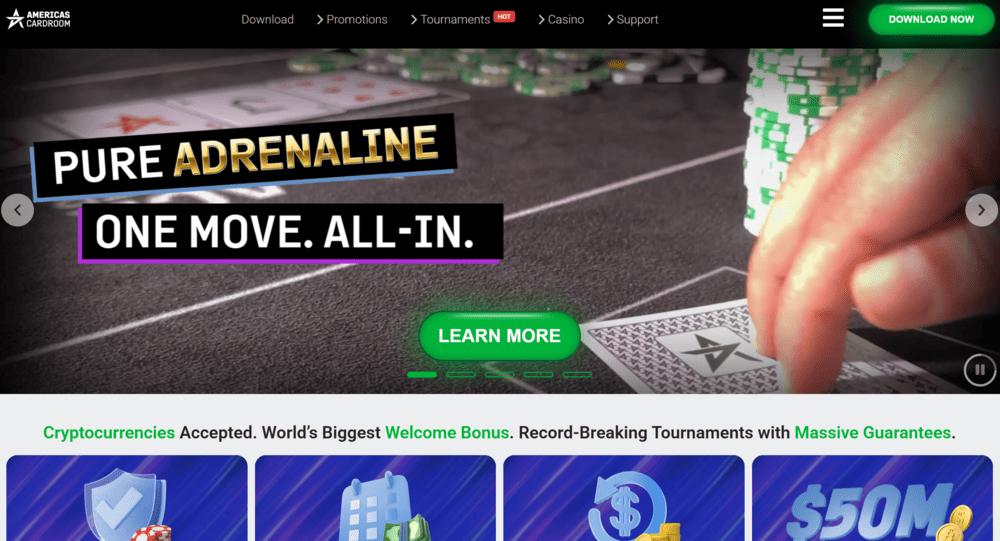
Americas Cardroom allows quick onboarding with email registration and supports crypto deposits without upfront verification. You can start playing immediately, especially in their no-limit hold’em tournaments.
During testing, we had no issues depositing and entering games without KYC. However, withdrawals are where restrictions begin to show. Crypto cashouts under ~$2,000–$3,000 typically go through without checks, but once you exceed ~$5,000, KYC is commonly triggered.
Pain points mainly come from payment methods. Using fiat (cards) introduces fees and increases the likelihood of verification. Crypto remains the only realistic way to stay anonymous.
Americas Cardroom Features
- Payout Time: 1 hour
- Welcome Bonus: 150% deposit match up to $2,000
- Payment Methods: BTC, ETH, LTC, USDT, credit/debit cards, P2P
- Min. Deposit: $10
- Wagering Requirement: $1 released for every 27.5 Awards Points
- Poker Games Available: Texas Hold’Em, Pot Limit Omaha
Pros
-
Weekly guaranteed prize pools of $9+ million
-
Email signup with no KYC required to start playing
-
Accepts crypto, fiat, and P2P deposits
-
Lighting PKOs available for quick poker play
-
Earn up to 60% rakeback every week
Cons
-
High payment fees for fiat transactions
-
Mostly offers Texas Hold’em tournaments
-
May require KYC for large withdrawals
#3. BCPoker – Massive Anonymous Poker Community with Great Selection of Games

Accepted Cryptocurrencies
Payment Methods
User Experience
Withdrawal Speed
Anonymity
Poker Library
BCPoker is one of the largest no verification poker platforms in the world. It boasts more than 5 million monthly active players and over $500 billion in wagers. What that means for you is that there’s always an active table or a competitive tournament to join.

BCPoker stands out for sheer traffic, but it’s also one of the more relaxed platforms when it comes to KYC. You can register and play without any identity verification, and during testing, we deposited crypto and joined games instantly. The platform supports both crypto and fiat, but sticking to crypto is key to avoiding verification.
What’s notable here is that KYC is rarely triggered for standard withdrawals. We were able to cash out without ID, even at mid-range amounts. The only consistent trigger we found is withdrawing bonus-related funds or abusing promotions.
BCPoker Features
- Payout Time: 0-10 minutes
- Welcome Bonus: 10% deposit match up to $200
- Payment Methods: BTC, ETH, USDT, USDC, BCD, credit/debit cards
- Min. Deposit: $5
- Wagering Requirement: 50x
- Poker Games Available: Texas Hold’em, Pot Limit Omaha, 6+ Short Deck
Pros
-
5+ million active monthly players to compete against
-
Wide range of formats: cash, MTTs, Spin & Go, short deck
-
No fees and quick payouts for crypto
-
Very user-friendly mobile apps (iOS and Android)
-
Daily leaderboard offers a $500 prize pool
Cons
-
Tournament selection can feel overwhelming for new players
-
Smaller welcome bonus than other top no KYC poker sites
-
Bonus withdrawals can trigger verification checks
#4. Black Chip Poker – Top No KYC Poker Site for Rakeback and Ongoing Promos
Accepted Cryptocurrencies
Payment Methods
User Experience
Withdrawal Speed
Anonymity
Poker Library
Black Chip Poker lets you sign up and start playing without an ID, using email registration and crypto deposits. Gameplay is fully accessible without KYC, and we were able to deposit and play without any restrictions. Withdrawals are less predictable. While we successfully cashed out in BTC and USDT without verification, multiple user reports (and the platform’s terms) suggest that KYC can be triggered at the withdrawal stage.
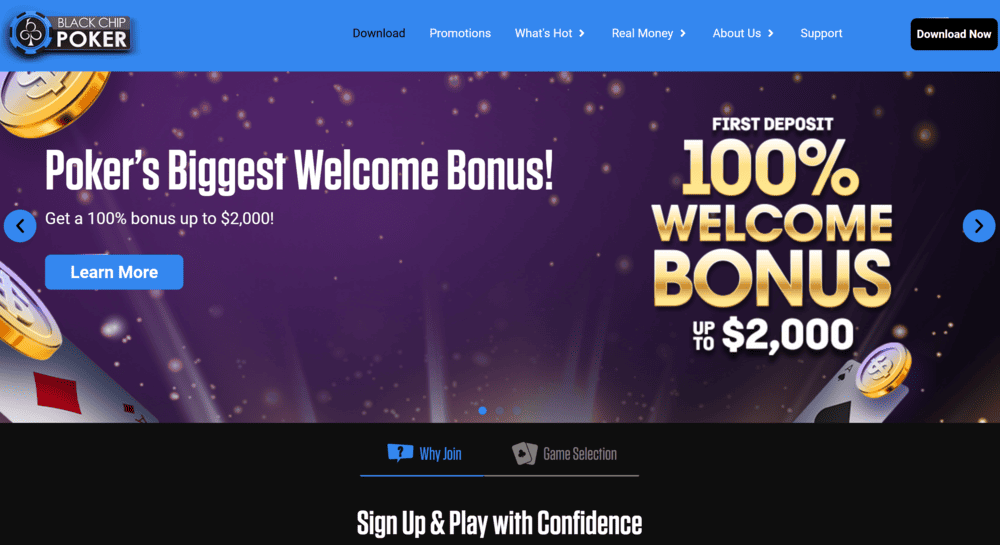
There’s no clearly defined threshold, which is the main pain point. Compared to other sites, the lack of transparency regarding KYC triggers is worth keeping in mind. You can deposit with crypto, credit/debit cards, P2P payments, and e-wallets like Luxon Pay. The site even supports two-factor authentication (2FA) for payouts to help keep your money secure.
Black Chip Poker Features
- Payout Time: 1 hour
- Welcome Bonus: 100% deposit match up to $2,000
- Payment Methods: BTC, ETH, LTC, USDT, credit/debit cards, P2P, e-wallets
- Min. Deposit: $10
- Wagering Requirement: $1 released for every 27.5 Award Points
- Poker Games Available: Texas Hold’Em, Pot Limit Omaha, 7-card Stud
Pros
-
No KYC required at signup or during gameplay
-
The Beast offers free weekly jackpots paid out from rake
-
Wide range of tournament formats and hold’em variations
-
Fast, anonymous crypto payouts with no fees
-
Operating since 2001, with positive reviews from players
Cons
-
KYC may be required at withdrawal, with no clear threshold
-
High proportion of re-entry tournaments (which require a large bankroll)
-
Charges fees for credit/debit card and e-wallet deposits
#5. Ya Poker – Best Mobile No KYC Poker App

Accepted Cryptocurrencies
Payment Methods
User Experience
Withdrawal Speed
Anonymity
Poker Library
Ya Poker is built for mobile play, and getting started is quick. You can register with an email and deposit crypto without verification, then jump straight into tournaments. We tested withdrawals using crypto and found that smaller payouts (under ~$1,000) were processed without any checks. Larger withdrawals or any fiat payments can trigger KYC, especially if you switch payment methods.
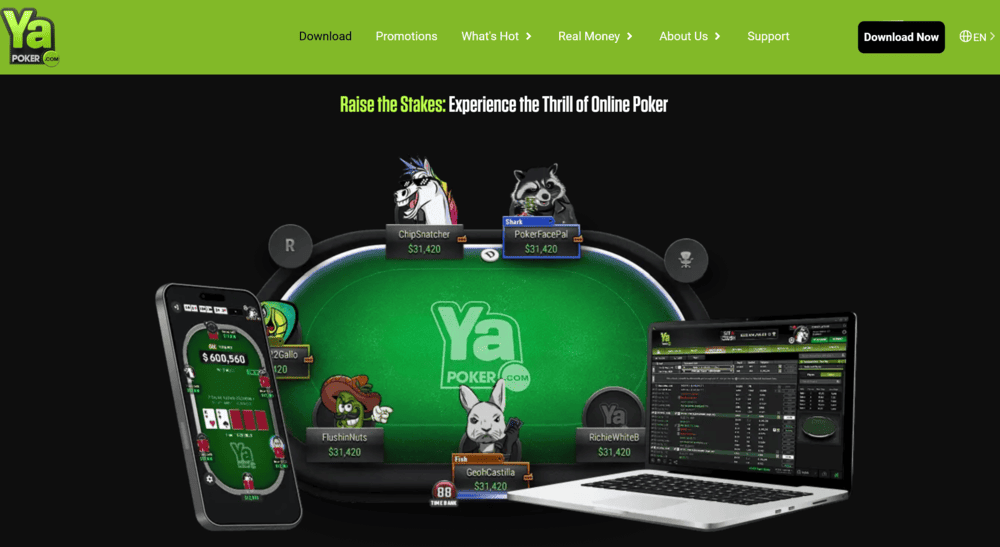
We were impressed with the range of Texas Hold’em tournaments at Ya Poker, too. The site offers a mix of freerolls, re-buys, and progressive knockout tournaments. There are also unique formats such as speedy two-hour tournaments, bomb pots, and mystery bounties. New tournaments kick off every 5-10 minutes throughout the day, so you never have to wait long to jump into the action.
The biggest limitation here is mixed payment support: crypto is clean, but fiat introduces delays and verification risk.
Ya Poker Features
- Payout Time: 1 hour
- Welcome Bonus: 100% deposit match up to $2,000
- Payment Methods: BTC, ETH, LTC, USDT, credit/debit cards, P2P, e-wallets
- Min. Deposit: $10
- Wagering Requirement: $1 released for every 27.5 Award Points
- Poker Games Available: Texas Hold’Em, Pot Limit Omaha
Pros
-
User-friendly mobile apps for iOS and Android
-
Crypto withdrawals under ~$1,000 processed without ID
-
Ongoing rakeback and leaderboard rewards
-
Accepts crypto, fiat, and e-wallet payments
-
Hundreds of tournaments every day are open to all players
Cons
-
It requires KYC checks for some fiat payments
-
Customer support can sometimes be slow to respond
-
Some fiat payout methods take 5+ days
Best Anonymous Poker Sites Compared
While privacy is the common thread across these platforms, each site specializes in a different area of the game. Use the table below to identify the platform that best aligns with your play volume, technical setup, and preferred stakes.
| Poker Site | Best Feature |
Which User Will It Work For?
|
| CoinPoker | Native USDT Economy |
Players who want to avoid crypto volatility while playing at high-traffic tables.
|
| Americas Cardroom | $10M+ Weekly Guarantees |
Serious tournament grinders and professional players looking for prize pools.
|
| BCPoker | In-Browser/No-Download Play |
Casual players who want to jump into a game instantly without installing software.
|
| Stake
(and similar Stake alternatives) |
Integrated Casino + Poker Ecosystem (Instant crypto poker, Plinko/Crash crossover traffic, no account complexity) | Crypto casino players who want poker, sportsbook, and Originals-style games all in one wallet with fast access. |
| Bovada | Anonymous Tables + Zone Poker (fast-fold cash games, soft recreational player pools) | US-focused casual and semi-serious players who prefer anonymous games and softer competition over high-stakes pro environments. |
How We Rated Anonymous Poker Sites (Methodology)
Rating anonymous poker sites typically involves several key factors, such as anonymity, security, reputation, game variety, and transaction methods. As we want to ensure both player safety and an enjoyable gaming experience, we follow several criteria:
Anonymity & Privacy
The site’s level of anonymity is critical. The best anonymous poker sites with no KYC allow players to join and play without revealing personal information. To maintain user privacy, the platform should provide secure registration methods (e.g., email-only sign-ups or crypto wallets).
Security
Sites should offer robust security features such as SSL encryption, two-factor authentication (2FA), and decentralized data storage. Security protocols help protect users’ financial and personal information. This approach aligns closely with how the best decentralized casinos operate, in which on-chain mechanics and reduced reliance on centralized intermediaries enhance transparency and player control.
Reputation & Trustworthiness
The poker site’s history and reputation are key indicators of its trustworthiness. The best anonymous poker sites with no KYC requirements generally rank higher because they offer positive user feedback, prompt payouts, and transparent policies.
Transaction Methods & Speed
Anonymous poker casinos often support cryptocurrency deposits and withdrawals (Bitcoin, Ethereum, etc.). These transactions should be processed quickly and incur minimal fees, especially for Tether, which boasts the fastest major cryptocurrency speeds. Sites offering fast cashouts are rated higher.
Game Variety & Software Quality
The range of poker games available (Texas Hold’em, Omaha, etc.) and the quality of the gaming software are important factors. Sites with smooth interfaces, stable servers, and mobile-friendly platforms are rated more favorably.
Fairness & RNG Certification
Ensuring that games are fair is crucial. Anonymous poker sites should use provably fair algorithms or RNG (Random Number Generator) certifications from reputable auditing firms to ensure no foul play.
Customer Support
Reliable customer service, available 24/7, can elevate a site’s rating. Players should be able to contact support via live chat, email, or other methods and receive prompt assistance.
Bonuses & Promotions
Sites offering generous bonuses, rakeback deals, and promotions tend to attract more players. However, it’s also important to assess the fairness of wagering requirements attached to these offers.
Traffic & Player Pool
The size of the player pool and the level of site traffic impact the overall experience. Higher traffic ensures a broader selection of tables, tournaments, and game speeds, making it easier to find games at any hour.
Regulation & Licensing
Though anonymous poker sites often operate outside of traditional regulatory frameworks, some still maintain licenses from reputable jurisdictions. The best anonymous poker sites with no KYC are licensed, which, given anonymity, can inspire greater confidence among players.
What Are Anonymous Poker Sites Without Verification?
Anonymous poker sites allow crypto players to register, fund their accounts, and start playing without going through intrusive identity checks like KYC (Know Your Customer). This makes them a top choice for privacy-focused poker fans who value discretion.
Players can enjoy poker in complete confidentiality, especially when depositing and withdrawing with cryptocurrencies such as Bitcoin or Litecoin. These digital assets process transactions without exposing sensitive personal or banking details, giving you an extra layer of anonymity while keeping your bankroll secure.
Players can sign up with just a username and password, ensuring full anonymity. This makes them appealing to those seeking privacy.
Players looking for additional crypto-friendly options may also be interested in Bitcoin poker sites, which focus on BTC-based gameplay, as well as broader no KYC crypto casinos that offer slots, live games, and other gambling formats alongside poker.
Engaging in “No KYC” or unregulated cryptocurrency gambling carries risks. You must be aware that you can lose all funds you gamble, and that these platforms offer little to no consumer protection or regulatory oversight. The lack of identity verification can limit player protections, making it harder to resolve disputes, so we suggest users be careful while gambling anonymously.
What is KYC?
KYC stands for ‘Know Your Customer’ and is a process used by most online casinos to verify players’ identities. It is mandated by the government or licensing regulations to help prevent underage gambling and comply with anti-money laundering (AML) laws.
If you’re asked to complete a KYC request, you must send in copies of personal documents to prove your identity. The most common forms include:
- Government-issued ID card with a photo (e.g., passport, driver’s license)
- Proof of address no longer than 3 months old (e.g., utility bill, phone bill)
- Proof of payment method (e.g., bank statement, e-wallet screenshot)
Once uploaded and corroborated by the casino’s payment team, which usually takes 24-48 hours, you’ll enjoy unrestricted access to the platform and won’t face issues making withdrawals.
How Anonymous Poker Sites Work?
Anonymous poker sites allow players to play online poker without revealing their identities or undergoing KYC verification. Players can register using only a username and password, with no need for personal information like name, address, date of birth, or email. This pseudonymous approach keeps the player’s identity hidden from the platform and other users.

In the same way, such sites usually base their operations on Bitcoin and Ethereum, aside from privacy-centered coins like Monero. This is mainly because crypto transactions do not include any interference from banks or payment processors. Transactions are only traceable via the blockchain, meaning that only wallet addresses are detectable.
Traditional gambling sites often require KYC to comply with regulations, which involves submitting ID documents and proof of address to verify the account. In other cases, players are asked to provide a source of funds that delves deeper into their financial history.
Anonymous poker platforms bypass this process entirely, allowing players to deposit, play, and withdraw funds without ever having to disclose their identity.
Many anonymous poker sites use provably fair technology that leverages blockchain to ensure that game outcomes are random and transparent. Players can verify that neither the platform nor other users have tampered with the game, ensuring fairness while maintaining anonymity.
Pro Tip: Use anonymous cryptocurrency wallets to store and transfer funds securely without revealing personal information
Benefits of Choosing No KYC Poker Platforms
No-KYC poker sites are popular because they offer greater privacy, faster withdrawals, lower payment fees, and easier access for players in restricted regions. Many crypto poker players also prefer them because they can deposit, play, and cash out without uploading personal documents or waiting days for account approval.
- Players don’t need to share personal or financial information, protecting their identity and privacy. This is especially appealing to those who don’t want their gambling activity tracked or linked to them.
- Deposits and withdrawals are processed quickly, often within minutes, without the need for KYC approval or dealing with banks.
- Players from regions with strict gambling regulations or payment restrictions can easily access no-KYC poker platforms. Crypto transactions make it possible to bypass these restrictions without revealing location or identity.
- The best anonymous poker sites with no KYC have lower fees since they operate without the need for banks or third-party processors. Crypto transactions tend to have minimal costs, especially when using more efficient coins like Litecoin or Monero.
- Access to global player pools means more active tables, larger tournaments, and better game availability across cash games, MTTs, and Sit & Gos at any time of day.
- For those who prioritize secrecy, no KYC platforms offer true anonymity. With the combination of pseudonymous registration, crypto payments, and no personal data sharing, players can enjoy a completely private poker experience.
Are Anonymous Poker Sites Legal?
Yes, but not everywhere. Anonymous poker sites can be legal to use in certain jurisdictions, but their legality ultimately depends on the gambling laws in your country or region. There is no universal rule, so what’s allowed in one place may be restricted or completely prohibited in another.
How Jurisdiction Affects Legality
Online poker laws vary widely by country and region. In some jurisdictions, online poker is explicitly regulated or licensed, while in others it exists in a legal gray area or is restricted altogether. The use of cryptocurrency does not automatically make poker illegal, but it can place platforms outside traditional regulatory frameworks.
Because anonymous poker sites often operate offshore, they may legally accept players from many regions. However, this does not override local laws that govern gambling activity where the player resides.
Player Responsibility and Compliance
Players are expected to understand and follow applicable local regulations when accessing anonymous poker platforms. This includes age requirements, online gambling restrictions, and any reporting obligations tied to gambling activity.
For privacy-focused players, anonymous poker sites offer discretion and flexibility, but that comes with fewer regulatory safeguards. As a result, these platforms are best suited for users who are comfortable balancing increased privacy with personal responsibility.
Are No-KYC Poker Sites Safe?
Yes, anonymous poker sites can be safe, but only if you choose the right platforms and understand how they operate. Unlike fully regulated poker rooms, they don’t rely on strict identity checks, so safety depends more on the site’s track record, transparency, and how it handles withdrawals.
Well-established anonymous poker sites typically use standard security measures such as SSL encryption, internal risk controls, and transparent withdrawal rules. Many also rely on provably fair systems or audited RNGs to demonstrate game integrity, which helps offset the lack of traditional oversight.
That said, anonymity comes with trade-offs. Dispute resolution options are often limited, and players may have fewer formal protections if issues arise. For this reason, it’s important to review withdrawal terms carefully, test payouts with small amounts, and stick to platforms with a consistent track record of timely payments.
How to Play Anonymous Online Poker Safely
Playing anonymous poker safely comes down to a few key habits: secure your account, use the right wallet setup, understand how withdrawals work, and know exactly when KYC might be triggered. If you get these right from the start, you can enjoy private gameplay without running into surprises later.
Secure Your Poker Account From the Start
Start by securing your poker account itself. Always use a strong, unique password that you don’t reuse on other platforms. If the site supports two-factor authentication (2FA), enable it immediately to add an extra layer of protection against unauthorized access.
Avoid logging in from shared or public devices, and log out after each session, especially when playing on mobile or shared networks. Simple hygiene steps like these significantly reduce account takeover risks.
Use a Separate Crypto Wallet for Poker Play
For anonymous poker, cryptocurrency payments are essential. Use a dedicated crypto wallet for poker activity rather than your primary long-term storage wallet. This separation limits exposure if a platform is compromised or if wallet addresses become publicly traceable.
Before depositing large amounts, test withdrawals with a small transaction. This confirms payout speed, wallet compatibility, and withdrawal rules without putting meaningful funds at risk.
Make Sure the Platform Is Legit and Fair
Not all no-KYC poker sites are equal. Before playing, review the platform’s terms around withdrawals, wagering requirements, and bonus conditions. Pay close attention to limits, delays, or discretionary clauses tied to large cashouts.
Sites that publish provably fair systems or RNG certifications provide additional confidence. These tools allow players to verify that results are random and not manipulated, even without regulatory oversight.
Check KYC Triggers Before You Play
This is where most players get caught off guard. A site can feel “no KYC” until the moment you try to withdraw. Look for clear details like:
- At what amount withdrawals trigger verification (e.g., $2,000–$5,000 ranges)
- Whether multiple withdrawals in a short time cause reviews
- If changing wallet addresses or using bonuses increases scrutiny
If this information isn’t clearly explained, that’s a red flag. The best platforms are upfront about when and why checks happen.
Protect Your Connection and Device Privacy
Your internet connection plays a major role in anonymity. Using a reputable VPN helps mask your IP address and prevents location-based tracking. Choose a provider with a strict no-logs policy to avoid creating new data trails.
Keep your device secure by updating operating systems and browsers regularly. Avoid installing unnecessary browser extensions, as many collect data or introduce security vulnerabilities.
How to Make Deposits & Withdrawals Anonymously?
Follow the steps below to ensure you’re able to effect your no-verification payments correctly: set up a crypto wallet and buy crypto, visit a poker site and make a deposit, go to the withdrawal section, keep records of the transaction, and enjoy playing anonymously.
-
Set Up a Cryptocurrency Wallet
As long as you opt for one of the best crypto wallets, this will allow you to store and manage your digital currencies securely.
-
Buy Cryptocurrency From a Reputable Exchange
Ensure that the exchange you choose doesn’t require extensive personal information by picking one of the top anonymous crypto exchanges.
-
Go to Your Selected Poker Site & Click Deposits
Follow the instructions to transfer funds from your wallet to the poker site, ensuring that the transaction remains anonymous.
-
Navigate to the Casino's Withdrawal Section
Enter your cryptocurrency wallet address to receive your winnings.
-
Keep Records of Your Transactions
This can help you track your gaming activity and manage your bankroll effectively.
-
Enjoy Playing Anonymously
You’re now good to go on your no KYC crypto poker casino.
Tips for Maintaining Anonymity While Playing
Tips for maintaining anonymity while playing include avoiding sharing personal info, using a VPN, creating a pseudonymous username, reducing browser tracking, using privacy-focused browsers, and staying informed about privacy best practices. The tips below focus on protecting your identity, reducing digital footprints, and avoiding common privacy mistakes while playing.
Avoid Sharing Personal Information
Never disclose personal details such as your real name, location, email address, or contact information while playing. Even small details shared in chats or profiles can be combined to identify you over time.
Use a VPN to Mask Your Connection
A VPN helps mask your IP address and encrypt your internet traffic, making it harder for third parties to track your activity or determine your location. For best results, choose a reputable VPN provider with a strict no-logs policy.
If you want platforms that support this setup, explore casinos offering a VPN-friendly gambling experience.
Create a Pseudonymous Username
Register with a username that does not link back to your real identity. Avoid personal identifiers, reused social media handles, or anything that could link your poker account to your real-world identity.

Reduce Browser Tracking
Regularly clear cookies and cache to limit tracking by poker platforms or advertisers. Using privacy-focused browsers can further reduce exposure by blocking trackers and minimizing data collection during sessions.
Use Privacy-Focused Browsers
Browsers designed with privacy in mind, such as Tor or Brave, help reduce tracking and fingerprinting. These browsers are increasingly popular among users who prioritize anonymity while browsing and gaming online.
Stay Informed About Privacy Best Practices
Anonymity tools and threats evolve over time. Regularly reviewing updated security practices, wallet hygiene, and privacy tools helps ensure your setup remains effective against new risks.
Step-by-Step Guide to Getting Started with Anonymous Poker
Getting started with anonymous poker involves choosing a reputable no-KYC poker site, comparing games and bonuses, selecting a crypto-friendly platform with strong security, and testing the games before committing larger stakes.
-
Pick a Brand from our No-KYC Poker Casinos List
All these sites are fully licensed, boast a solid reputation, and have positive user reviews.
-
Make Sure the Site Offers a Variety of Poker Games
Examples include Texas Hold’em and Omaha, as well as freerolls and cash tournaments.
-
Compare the Casinos' Welcome Bonuses and Ongoing Promotions
Browse the different sites to find the best value for your money; each of our brands offers a first-deposit boost.
-
Look for Crypto-Focused Sites
This will enhance your anonymity. Some sites, such as CoinPoker, don’t ask you to verify your account with documents.
-
Choose a Platform with Strong Security
Measures such as encryption and secure payment options work to protect your information.
-
Start Playing and Test the Platform
Once registered and funded, try out the poker tables or freerolls to get a feel for the gameplay, bonuses, and overall user experience before committing larger stakes.
Types of Tournaments Available on No KYC Sites
Another thing I love about anonymous poker is the regular offering of tournaments, including MTTs, sit-and-go tournaments, knockout tournaments, turbo and hyper turbo tournaments, and freeroll tournaments. Scroll down to find out why they are appealing.
Multi-Table Tournaments (MTTs)
These tournaments feature multiple tables with a large number of players competing. As players are eliminated, the remaining players move to new tables until one winner remains. MTTs often have larger prize pools, making them highly competitive.
Sit-and-Go Tournaments
Sit-and-go (SNG) tournaments are smaller tournaments that start as soon as a certain number of players register. They can range from just a few players to larger groups. SNGs are typically faster-paced than MTTs and are great for players looking for quick action.
Knockout Tournaments
In knockout tournaments, you can earn a bounty for every opponent they eliminate. This format adds an extra layer of strategy, as you must balance between accumulating chips and targeting weaker players for bounties.
Turbo and Hyper-Turbo Tournaments
These tournaments feature faster blind levels, leading to quicker gameplay. Turbo and hyper-turbo tournaments attract players who enjoy high-pressure situations and rapid action.
Freeroll Tournaments
Freerolls are free to enter, allowing players to compete for real cash prizes without risking any money. They are an excellent way for newcomers to gain experience and build their bankrolls.

Popular Poker Variants on Anonymous Sites
Anonymous poker sites offer several popular variants, including Texas Hold’em, Omaha, and seven-card stud. While sharing a similar structure and hand rankings, these variants differ in their rules and strategies.
Texas Hold’em
Texas Hold’em is the most popular poker variant worldwide and is a staple on anonymous poker sites. In this game, each player receives two private cards (hole cards), and five community cards are dealt face-up on the table.
Players must use these cards to make the best possible five-card hand. The game’s combination of skill, strategy, and chance makes it accessible for beginners while providing depth for experienced players.
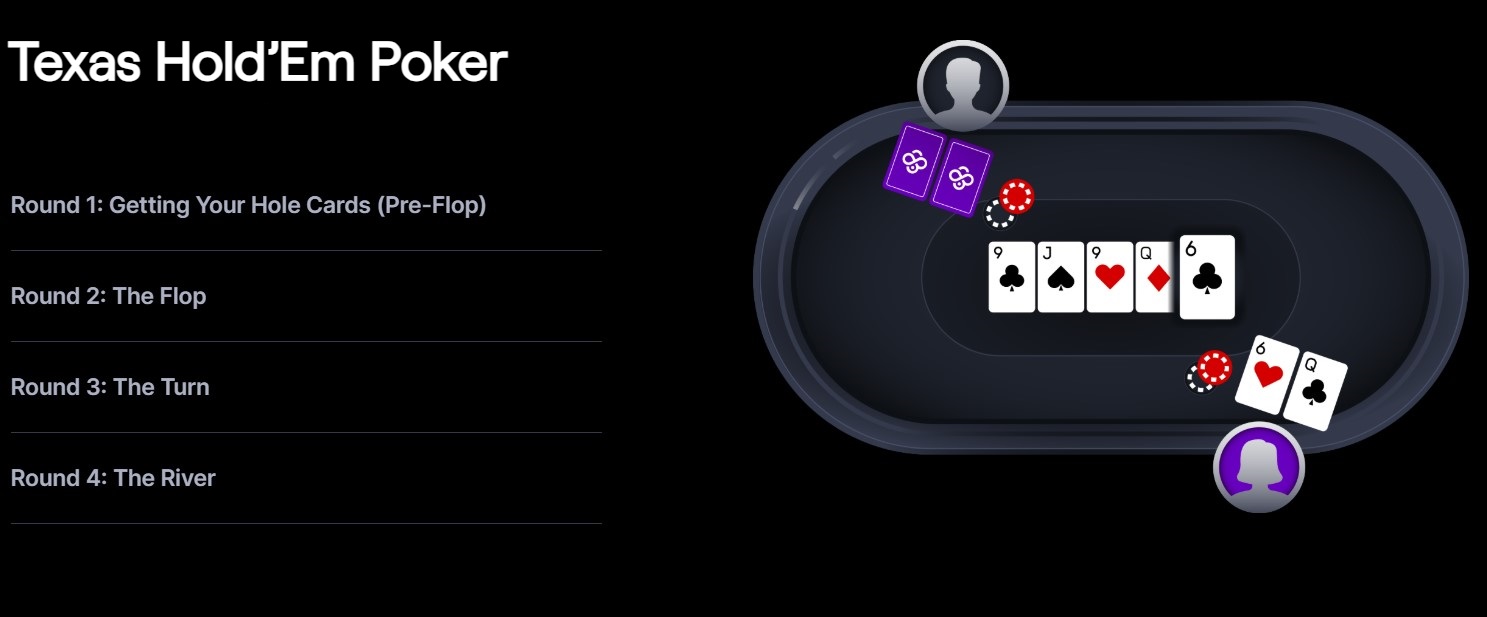
Texas Hold’em is the most common and popular style of poker. If you are just getting started with anonymous poker sites, Texas Hold’em is a good start for beginners looking to learn the ropes before diving into other variants.
Omaha
Omaha is another popular variant, especially among seasoned poker enthusiasts looking for a more intricate game. In Omaha, each player is dealt four hole cards, and they must use exactly two of these cards in combination with three of the five community cards to create their hand.
This variant introduces a higher level of complexity and strategy, as players have more cards to consider when making decisions. The increased hand possibilities can lead to more action and larger pots, making it particularly appealing to those who enjoy more dynamic gameplay.
Seven-Card Stud
Unlike Texas Hold’em and Omaha, Seven-Card Stud does not use community cards. Each player is dealt seven cards throughout the game: three face-down and four face-up. Players must make the best five-card hand from their seven cards.
This variant emphasizes memory and strategy, as players must pay attention to the visible cards and their opponents’ actions.
Payment Methods to Use at No KYC Poker Sites
At no-KYC poker sites, the main payment methods you’ll actually run into are Bitcoin (BTC), Ethereum (ETH), stablecoins like USDT and USDC, Litecoin (LTC), and privacy-focused coins like Monero (XMR). Each one behaves differently in terms of privacy, speed, and likelihood of triggering verification.
The key difference isn’t just which coin you use, but how it moves through the system, from deposit approval to processing by the casino, and finally settlement on the blockchain. Some methods keep things relatively pseudonymous, others are faster but more traceable, and a few are designed specifically for stronger privacy.
Bitcoin (BTC)
Bitcoin is the most widely accepted option and works almost everywhere, but it’s only pseudonymous, not fully private. Transactions are visible on-chain, which means they can potentially be traced.
- Anonymity: Medium (pseudonymous, not private)
- Identity linking risk: Low at the deposit stage, medium at the withdrawal stage if amounts are large
- Verification risk: Moderate for higher withdrawals or flagged activity
- Timing: Approval: 2–10 minutes
- Processing: 5–15 minutes (can be longer during manual review)
- Blockchain: ~10–30 minutes, depending on network congestion
Bitcoin is best for general use, but not ideal if maximum privacy is your priority.
Ethereum (ETH)
Ethereum is similar to Bitcoin in terms of transparency, but, in some cases, faster depending on network load. It’s commonly accepted but not privacy-focused.
- Anonymity: Medium
- Identity linking risk: Low for deposits, moderate for withdrawals
- Verification risk: Medium on large or bonus-related cashouts
- Timing: Approval: 2–10 minutes
- Processing: 5–20 minutes
- Blockchain: ~1–10 minutes (varies heavily with gas fees)
ETH is convenient, but not ideal for anonymity-focused players.
Stablecoins (USDT / USDC)
Stablecoins are popular because they reduce volatility risk, but privacy depends heavily on the network used (e.g., TRC-20, ERC-20, Solana).
- Anonymity: Medium (varies by network)
- Identity linking risk: Low for wallet use, higher if bought via fiat on-ramps
- Verification risk: Medium to high on fiat-linked accounts or large withdrawals
- Timing: Approval: 1–10 minutes
- Processing: 1–5 minutes
- Blockchain: TRC-20: ~1–3 minutes; ERC-20: ~5–20 minutes; Solana: often under 1 minute
Stablecoins are best for predictable bankroll management, not maximum anonymity.
Litecoin (LTC)
Litecoin is often overlooked, but it’s fast, cheap, and widely supported across crypto casinos.
- Anonymity: Medium
- Identity linking risk: Low for direct wallet use
- Verification risk: Low to medium, depending on withdrawal size
- Timing: Approval: 2–10 minutes
- Processing: 5–10 minutes
- Blockchain: ~2–10 minutes
LTC is a strong “everyday” option for quick deposits and withdrawals.
Monero (XMR)
Monero is the only major privacy-focused coin in this list and is designed specifically to hide transaction details.
- Anonymity: High (fully private by default)
- Identity linking risk: Very low when used directly from a private wallet
- Verification risk: Low, but it depends on whether the casino supports it natively
- Timing: Approval: 1–5 minutes
- Processing: 5–15 minutes
- Blockchain: ~10–20 minutes
Monero is the closest thing to true financial privacy in crypto poker, but availability is still limited compared to BTC or USDT.
What Are the Best Bonuses on No KYC Poker Sites?
The best bonuses on no-KYC poker sites are usually tied to deposit matches, reload offers, rakeback deals, freeroll entries, and referral rewards.
Unlike casino bonuses, poker promotions aren’t really about “wagering requirements” in the traditional sense; they’re mostly cleared through rake generated in cash games and tournament fees, which changes how fast (and safely) you can actually release value.
Below is how each bonus type really works in poker environments, including when verification can be triggered and what to watch out for.
Deposit Match
This is the most common welcome offer on poker sites. The platform matches a percentage of your deposit (for example, 100%–150%) and releases it gradually as you play.
- How it clears: Through rake generated in cash games and tournament buy-in fees (not betting volume)
- Contribution rate: Cash games: higher contribution (you generate rake per hand)
- MTTs/Sit & Gos: slower release (fees are paid upfront, rakeback comes indirectly)
- KYC trigger risk: Medium to high if you clear large matched bonuses quickly or withdraw bonus-inflated winnings
- Withdrawal impact: Some sites require partial KYC once bonus funds are fully released or if you cash out shortly after clearing
In practice, aggressive “bonus grinding” (high-volume multi-tabling just to clear bonuses fast) is one of the most common triggers for manual review.
Reload Bonus
Reload bonuses are recurring deposit boosts for existing players, usually smaller but easier to clear.
- How it clears: Same rake-based system, but with lower release thresholds than welcome bonuses
- Contribution rate: Cash games: steady and efficient for release
- Tournaments: slower but still consistent over time
- KYC trigger risk: Medium, especially if combined with frequent withdrawals or changing play patterns
- Withdrawal impact: Generally safer than welcome bonuses, but repeated high-value reload cycling can still flag accounts
Reloads are typically safer for long-term players because they don’t create sudden balance spikes that look “bonus-abused.”
Rakeback
Rakeback is one of the most “clean” forms of value in poker since it’s earned passively from your actual play.
- How it clears: Automatically credited based on rake generated
- Contribution rate: Directly tied to cash game volume and tournament fees paid
- KYC trigger risk: Low to medium, unless combined with large withdrawals in short timeframes
- Withdrawal impact: Rarely triggers verification on its own
Rakeback is usually the safest long-term bonus because it doesn’t rely on artificial clearing conditions or aggressive play patterns.
Freeroll Tournaments
Freerolls are free-entry tournaments with real-money prize pools, commonly used for player acquisition.
- How it clears: No clearing required (no deposit or rake contribution needed)
- KYC trigger risk: Medium to high if winnings exceed normal thresholds
- Withdrawal impact: Small wins are usually fine, but larger freeroll payouts often trigger wallet verification or full KYC checks
Even though they’re “free,” freerolls can be a soft entry point for compliance reviews if you cash out significant winnings.
Referral Bonuses
Referral programs reward you for bringing in new players who actually deposit and play.
- How it clears: Based on referred player activity (rake generated or deposit milestones)
- Contribution rate: Indirect; depends on how much your referrals actually play
- KYC trigger risk: Medium to high if referral earnings grow quickly or exceed typical player behavior patterns
- Withdrawal impact: Larger referral earnings are often reviewed before payout to confirm legitimacy
These bonuses are heavily monitored because they can resemble affiliate-style activity, which naturally attracts more scrutiny.
Conclusion: Anonymous Poker Sites
Anonymous poker sites give players the freedom to enjoy online poker with greater privacy and fewer onboarding hurdles. By removing lengthy identity checks, these platforms make it faster to join games, deposit funds, and withdraw winnings, often using crypto for added discretion.
However, privacy should never come at the cost of safety. Choosing reputable sites with clear licensing, strong security measures, and fair play systems is essential. When used responsibly, anonymous poker sites can offer a smooth, flexible, and private alternative to traditional online poker rooms.








FAQs
Can I trust the fairness of anonymous poker sites?

Usually, yes. Anonymous poker sites generally strive for fairness, yet, there’s always a risk of cheating, so it’s important to choose reputable sites like the ones we offer.
What are the withdrawal speeds like on these sites?
Withdrawal speeds vary between sites. Some offer instant withdrawals via cryptocurrency, while others may take a few days due to the processing speed of fiat options.
How do I choose the best anonymous poker site for me?
The best anonymous poker site for you depends on your preferences, so you should consider factors like game variety, deposit/withdrawal options, and customer support. We have reviewed the five leading no-KYC casinos in the online poker world above.
Can I play anonymous poker online for real money?
Yes, you can. Check out our recommended casino sites that all allow you to win real cash online.
Are No KYC Poker Sites Trustworthy?
No-KYC poker sites may be less trustworthy due to a lack of identity verification. Still, you shouldn’t worry if you choose one of our recommended as they are the best in the current market.
Is it legal to play anonymous poker online in the US?
It varies from state to state, so it is always a good practice to check out what are the laws in your region before playing poker games online.
What is the best anonymous poker site?
Currently, CoinPoker is a leader in this industry, alongside Lucky Block and Instant Casino.
References
- “Safer Gambling.” Gambling Commission, UK Government, www.gamblingcommission.gov.uk/public-and-players/safer-gambling.
- MIT Media Lab. Cryptocurrency and Blockchain Research, https://www.media.mit.edu/research/groups/cryptocurrency-and-blockchain/
- University of Cambridge Judge Business School. Blockchain and Cryptocurrency Research, https://www.jbs.cam.ac.uk/faculty-research/centres/alternative-finance/
- “License Register Curaçao Gaming Authority.” Curaçao Gaming Authority, 2025, https://www.gamingcontrolcuracao.org/en/133i348441001.

Why you can trust 99Bitcoins
Established in 2013, 99Bitcoin’s team members have been crypto experts since Bitcoin’s Early days.
Weekly Research
100k+Monthly readers
Expert contributors
2000+Crypto Projects Reviewed